

Ants may look like a minor household nuisance, but an infestation can become surprisingly persistent. Many homeowners try sprays, powders, home remedies, or repeated cleaning as soon as they notice an ant trail. These methods may reduce visible activity for a short time, yet the ants often return within days.
Understanding why DIY ant control often fails can help homeowners choose a more effective response, particularly when ants are repeatedly appearing in kitchens, bathrooms, balconies, utility areas, or around food storage spaces.
In homes across Rabodi, Thane, Maharashtra, ant activity can increase when food, moisture, nesting spaces, and convenient entry points are available.
Killing Visible Ants Does Not Remove the Colony
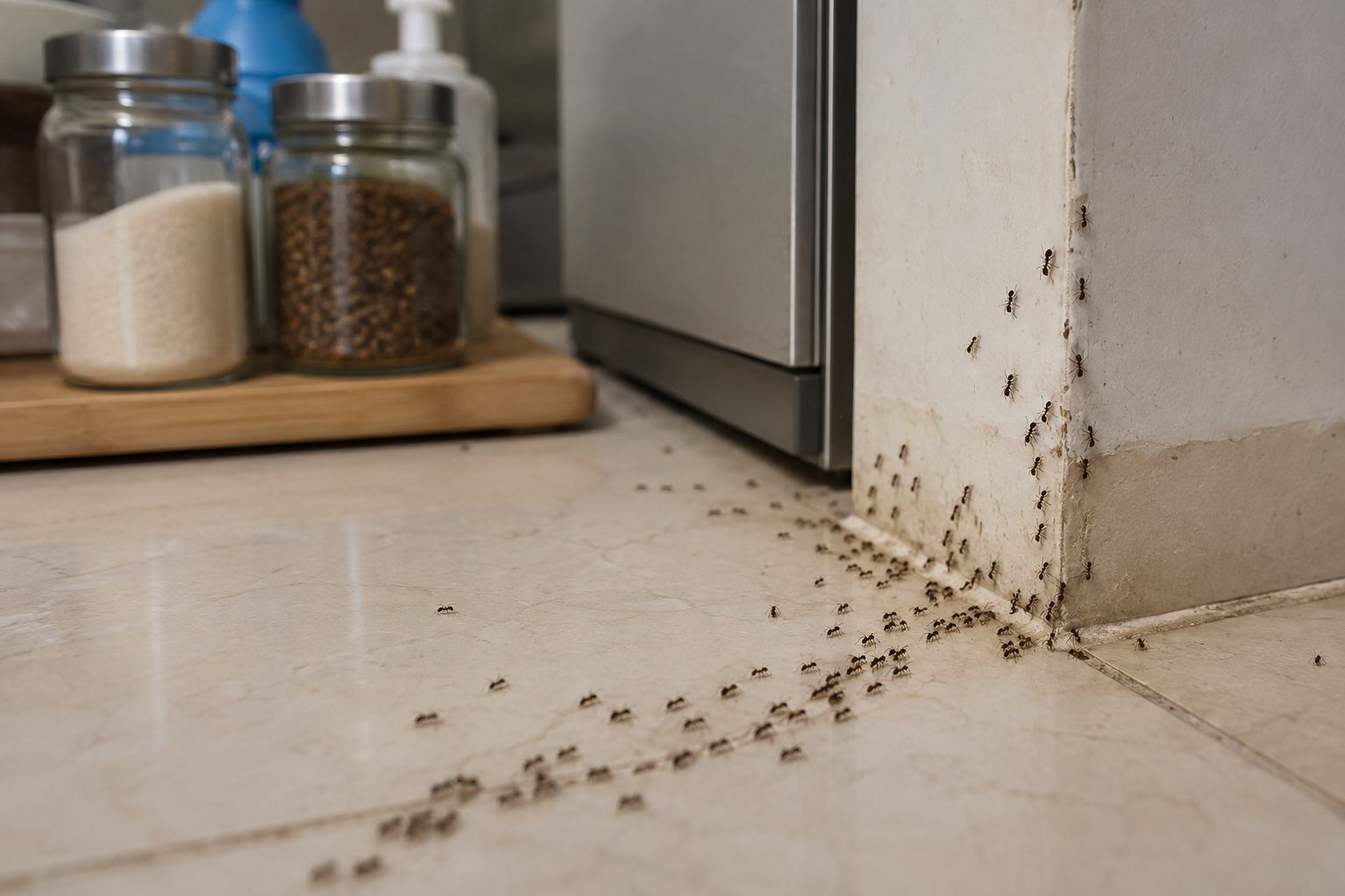
The ants moving across a kitchen counter are usually only a small portion of a much larger colony. Worker ants leave the nest to search for food and water before returning along established trails.
A household spray may kill some of these visible ants, but it may not reach:
- The main nesting location
- The queen
- Eggs and developing ants
- Satellite colonies
- Ants hidden inside wall gaps
- Nests around plumbing or exterior areas
As long as the colony remains active, new worker ants can continue appearing.
Ant Trails Can Keep Bringing Them Back
Ants communicate partly through chemical trails. Once workers locate a food source, other ants may follow the same route.
Cleaning visible ants without properly addressing these trails and the underlying attraction may therefore provide only temporary relief.
Food crumbs, sugary residue, uncovered containers, pet food, leaking taps, and damp areas can all encourage continued activity.
Using the Wrong Product Can Make Treatment Less Effective
Different ant species may behave differently and establish nests in different locations. Applying the same household product to every infestation does not necessarily address the actual source.
Excessive spraying may also interfere with bait-based strategies because ants need to carry certain bait formulations back toward the colony.
This is one reason professional ant control begins with inspection rather than immediately applying a pesticide.
Finding the Source Matters
When ants keep returning, inspect areas such as:
- Gaps around doors and windows
- Cracks near kitchen cabinets
- Plumbing penetrations
- Balcony openings
- Damp utility spaces
- Wall joints
- Areas around drains
- Exterior vegetation touching the building
Apartment homes may have additional challenges because ants can sometimes move through common structural gaps between adjoining areas.
Prevention Supports Better Long-Term Control
Simple housekeeping measures can reduce the conditions that attract ants.
Keep dry foods in sealed containers, clean spills promptly, avoid leaving dirty dishes overnight, empty waste regularly, repair water leaks, and remove food residue beneath appliances.
Cracks and unnecessary openings can also be sealed after active infestation routes have been assessed.
When Repeated DIY Treatment Is a Warning Sign
If ants continue appearing despite cleaning and household treatments, the problem may involve an established colony that requires more targeted intervention.
Professional inspection can identify activity patterns, possible nesting zones, entry routes, and conditions encouraging the infestation.
Doctors Pest Control Service provides pest-control support for homes and properties in Rabodi and other parts of Thane. The appropriate treatment should depend on the infestation rather than simply applying chemicals wherever ants are visible.
DIY measures can be useful for occasional ant activity. When the same trails repeatedly return, however, finding and addressing the source becomes far more important than repeatedly killing the ants you can see.