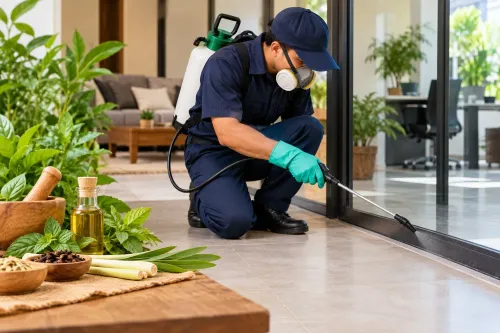
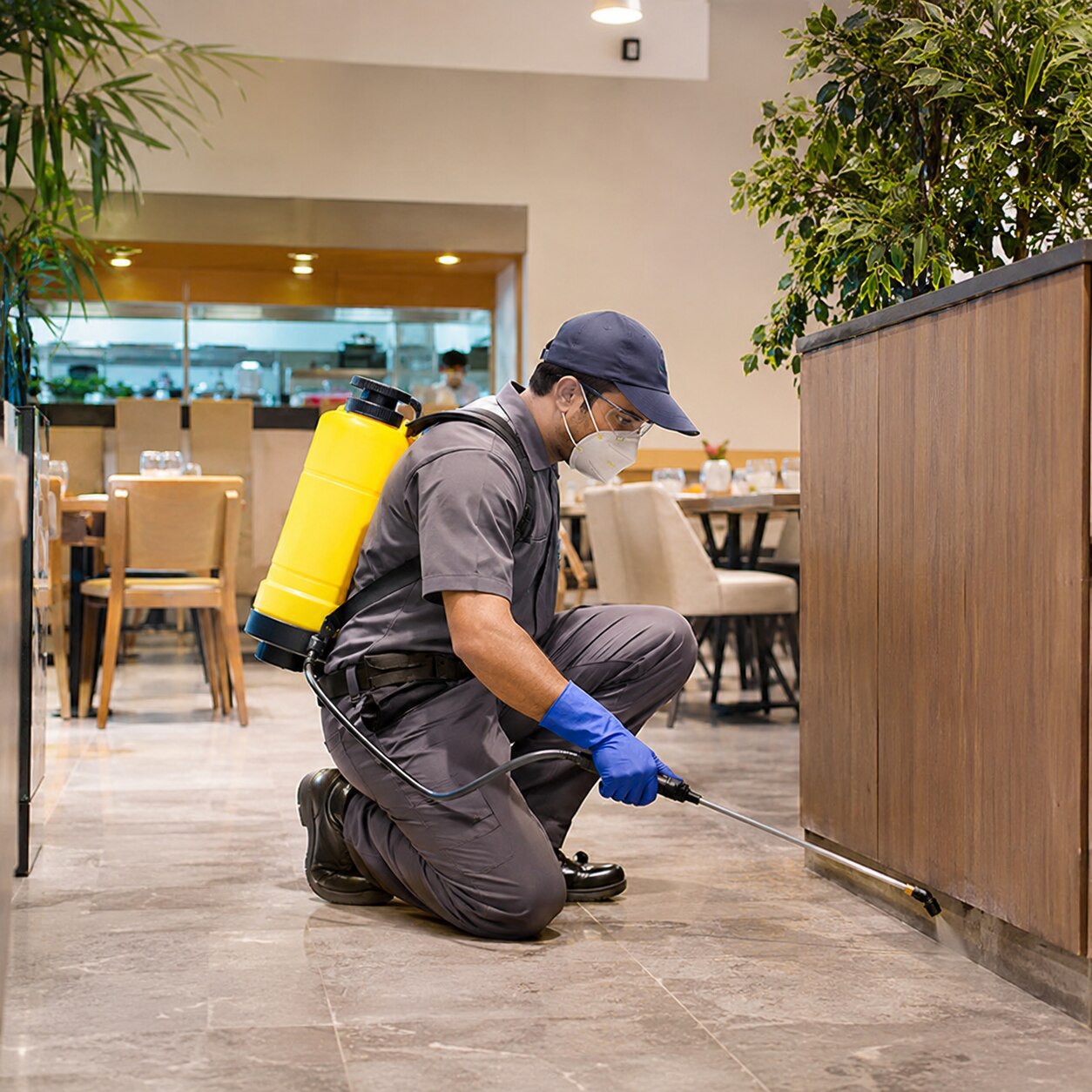
A clean-looking workplace can still contain harbourages, entry gaps, standing water, or contaminated storage areas that support pests between sightings. By the end, you will know how to set a risk-based service schedule, inspect your premises, prevent recurring problems, and judge whether a provider is delivering control rather than repeated spraying.
Key takeaways
- Inspect droppings, gnaw marks, egg cases and damaged packaging.
- Seal cracks, repair leaks and keep food in closed containers.
- Match inspections and treatments to your premises and pest risks.
- Request service records, treatment details and follow-up instructions.
Why Waiting for a Visible Pest Creates a Business Problem
No live pest does not prove a pest-free workplace. Cockroaches, rodents and stored-product insects hide in cracks, service ducts, drains, equipment voids and warm, damp areas; droppings, gnaw marks, egg cases and damaged packaging often appear before the pest itself. A hidden pest infestation can grow unnoticed until customers, staff or an inspector finds evidence.
The cost can arrive before treatment begins:
- Rejected stock when packaging shows gnawing, droppings or insect damage
- Customer complaints after pests enter food, retail or service areas
- Staff disruption when rooms, equipment or storage areas require emergency treatment
- Equipment downtime, lease disputes or failed inspections after contamination is reported
Regular commercial pest control is a prevention and detection system, not a promise that someone will spray every month. Inspection and monitoring reveal pest activity, entry gaps, leaks, waste problems and food residues while the response is still targeted. The schedule should reflect food handling, moisture, building age, waste storage, neighbouring units and monitoring results.
Ask for a service record that names inspected areas, evidence found, products and active ingredients, application locations, corrective actions and follow-up recommendations. For food businesses in India, FSSAI Schedule 4 requires pest prevention and a documented pest-control programme, so these records support both food safety and audit readiness.
Preventive work usually causes planned, limited disruption; emergency treatment brings greater interruption when stock, customers and operations are already at risk.
What a Regular Commercial Pest-Control Programme Actually Includes
A fixed monthly visit is not automatically the right plan. Set pest control frequency according to food-handling activity, moisture, waste storage, building age, construction defects, neighbouring units, complaints and monitoring results. A low-risk office may need less intensive service than a food warehouse with frequent deliveries and stored stock.
| Risk profile | Schedule decision | Main reason |
|---|---|---|
| Low-risk office | Longer intervals after baseline monitoring | Few food sources and limited pest pressure |
| Food premises or warehouse | Frequent inspections and monitoring | Food, moisture, deliveries and stock create entry points |
| Premises with recurring sightings | Short review intervals until controlled | Evidence indicates an unresolved defect or active infestation |
Each visit should accomplish a defined set of actions:
- Inspect kitchens, stores, waste areas, drains, service ducts, loading points and exterior boundaries for droppings, harbourage, entry gaps and live activity.
- Check traps, glue boards, bait stations and monitoring records, then compare findings with previous visits.
- Apply targeted treatment only when evidence supports it. Integrated pest management combines monitoring, sanitation, exclusion, follow-up and carefully selected pesticides; preventive pest control is not periodic spraying.
- Record inspected areas, pest evidence, products and active ingredients, application locations, corrective actions and follow-up findings.
For food businesses, FSSAI Schedule 4 requires a documented pest-control programme. The record should also identify needed repairs, such as sealed pipe penetrations, door sweeps, leaking plumbing or waste-storage changes.
Reactive pest treatment addresses an outbreak after disruption begins. A planned programme catches trends earlier, while repeated emergency applications can leave the building defect untouched.
What to Inspect and Fix Between Professional Visits
Use a pest inspection checklist during each shift or weekly facilities walk-through. Staff should look for evidence, entry points and conditions that support pests, then assign repairs before the next professional visit.
1. Inspect kitchens, storage rooms, loading bays and plant rooms for droppings and gnaw marks. Photograph the location, remove exposed food, and report repeated evidence immediately.
2. Check doors for daylight below or beside the frame. Replace damaged door sweeps and seals; a gap wider than 6 millimetres can admit mice and crawling insects.
3. Examine utility penetrations around pipes, cables and ducts. Seal open gaps with wire mesh and suitable sealant, not expanding foam alone, which rodents can chew through.
4. Look beneath sinks, around water heaters and beside floor drains for leaks, standing water, blocked drains or damp wood. Repair plumbing and keep drain covers fitted.
5. Inspect waste rooms and storage racks for overflowing bins, spilled food, cardboard clutter and stock touching walls. Remove waste daily, clean spills promptly and keep cartons at least 15 centimetres off the floor.
6. Check incoming deliveries for insects, gnawing, droppings or torn packaging before goods enter storage. Isolate suspect cartons and record the supplier, delivery date and affected area.
Do not dry-sweep or vacuum rodent droppings. Wet them with disinfectant, follow the product’s contact time, then wipe them up using gloves and appropriate protective equipment.
Record every defect, repair date and follow-up finding in the service log so the provider can distinguish treatment failure from a new introduction.
How Pest Control Changes by Type of Commercial Premises
A restaurant cannot use the same plan as a low-risk office because food, drains, deliveries and waste create different pest pressures. Choose visit frequency and treatment methods from inspection findings, complaints, construction defects and monitoring results—not from a fixed monthly calendar.
- Restaurant pest control must cover kitchens, floor drains, grease areas, storage and delivery points. FSSAI Schedule 4 requires pest prevention, hygienic premises and documented pest-control activity, including corrective actions.
- Office pest control focuses on pantry areas, washrooms, service ducts and shared waste rooms. Monitoring can guide less frequent treatment when food handling and pest activity remain low.
- Retail stores need checks around loading doors, shelving, cartons and customer-accessible areas. A treatment that contaminates merchandise or disrupts trading is a poor solution.
- Warehouse pest control must track incoming goods, dock seals, roof gaps, pallet storage and stock rotation. Rodent control also requires sealing entry points and removing accessible food and water.
- Clinics need controlled treatment near reception, utility rooms, waste-holding areas and staff kitchens. Protect patients, medicines, equipment and appointment schedules from exposure and disruption.
- Schools require inspections around kitchens, cafeterias, playground edges, drains and classroom storage, with work timed outside occupied hours.
- Complexes need zone-based plans for lifts, basements, waste rooms, parking areas, gardens and neighbouring units, since one untreated unit can reintroduce pests.
Across all premises, integrated pest management combines inspection, monitoring, sanitation, exclusion, targeted treatment and follow-up. Keep records of evidence, products, application locations, repairs and findings so recurring sightings lead to building fixes rather than stronger chemicals.
How to Choose a Provider and Verify the Work
Require a written programme and a visit record that proves what happened, where, and why. A useful pest-control service report names inspected areas, pest evidence, products and active ingredients, application locations, corrective actions, follow-up findings, and recommendations for sealing, waste handling, or sanitation.
For food businesses, FSSAI Schedule 4 requires a documented pest-control programme, so these commercial pest control records support pest-control compliance during audits and inspections.
Ask the provider to document:
- Monitoring devices, catches, photographs, or other evidence behind each treatment decision.
- Targeted baiting and other treatments, with label instructions, protected food-contact surfaces, ventilation, and re-entry precautions recorded.
- Complaints, responsible staff, deadlines for repairs, and the date used to verify that the problem declined.
- A risk-based schedule that changes with food handling, moisture, building defects, waste storage, neighbouring units, and monitoring results.
If you are comparing providers, ask Doctors Pest Control Service 9820089331 to show how its report would distinguish an inspection from a completed treatment.
| Option | What you receive | What it proves |
|---|---|---|
| Routine spraying | Date and chemical name only | Activity occurred, not that the source was controlled |
| Inspection-led IPM | Evidence, targeted treatment, repairs, and follow-up | The response matched the pest and its harbourage |
| Complaint response | Complaint location, action, recheck result, and closure date | The business investigated and measured the outcome |
Reject vague records such as “area treated” or “pest control completed.” More pesticide cannot replace sanitation, exclusion, monitoring, or a documented explanation of failure.
Related products
RODENT PEST CONTROL Rodents are mammals of the order Rodentia, from the Latin rodere “to gnaw”. View product → |
GENERAL TREATMENT Gel or cockroach bait will be applied in sensitive areas such as electrical control boxes, kitchen appliances, trolleys, pantry, in inches of... View product → |
Frequently asked questions
Why is waiting for a visible pest a business problem?
Pests often hide in cracks, drains, ducts and equipment voids. Droppings, gnaw marks, egg cases and damaged packaging can reveal an infestation before you see a live pest.
What does a regular commercial pest-control programme include?
A programme includes risk assessment, scheduled inspections, targeted treatment, monitoring, service records and recommendations for sealing entry points or removing food and moisture sources.
What should you inspect and fix between professional visits?
Check for droppings, gnawing, grease marks, damaged packaging, standing water and gaps around doors, pipes and drains. Seal openings, repair leaks and store waste and food securely.
How does pest control change by type of commercial premises?
Food businesses need close attention to storage, drains, preparation areas and contamination risks. Offices focus on kitchens, bins and building gaps, while warehouses need checks for pallets, loading bays and stored-product insects.
How do you choose a commercial pest-control provider and verify the work?
Ask about the inspection method, proposed treatments, technician qualifications, product labels, re-entry instructions, monitoring devices, follow-up timing and written service records. Verify that the completed work matches the agreed plan.
Related products
BEST PEST CONTROL SERVICES FOR BED BUGS BEST PEST CONTROL SERVICES FOR BED BUGS Bed Bugs are parasites that feed on blood. It can cause extreme itching and sleepless nights as they are nocturnal. View product → |
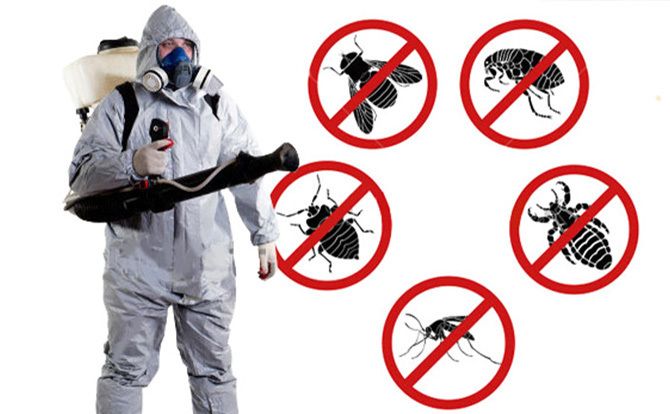 | General Disinfestations Service General Disinfestations Service Maintain a clean, safe, and pest-free home and working environment with our professional General Disinfestation Services. View product → |
 | Rodent Control Service Protect your home and workplace from rats and mice with our reliable Rodent Control Service in Thane. View product → |
COCKROACH, ANT AND SPIDER TREATMENT COCKROACH, ANT AND SPIDER TREATMENT Ants and cockroaches pose a major threat to most households as they can contaminate the food. View product → |