
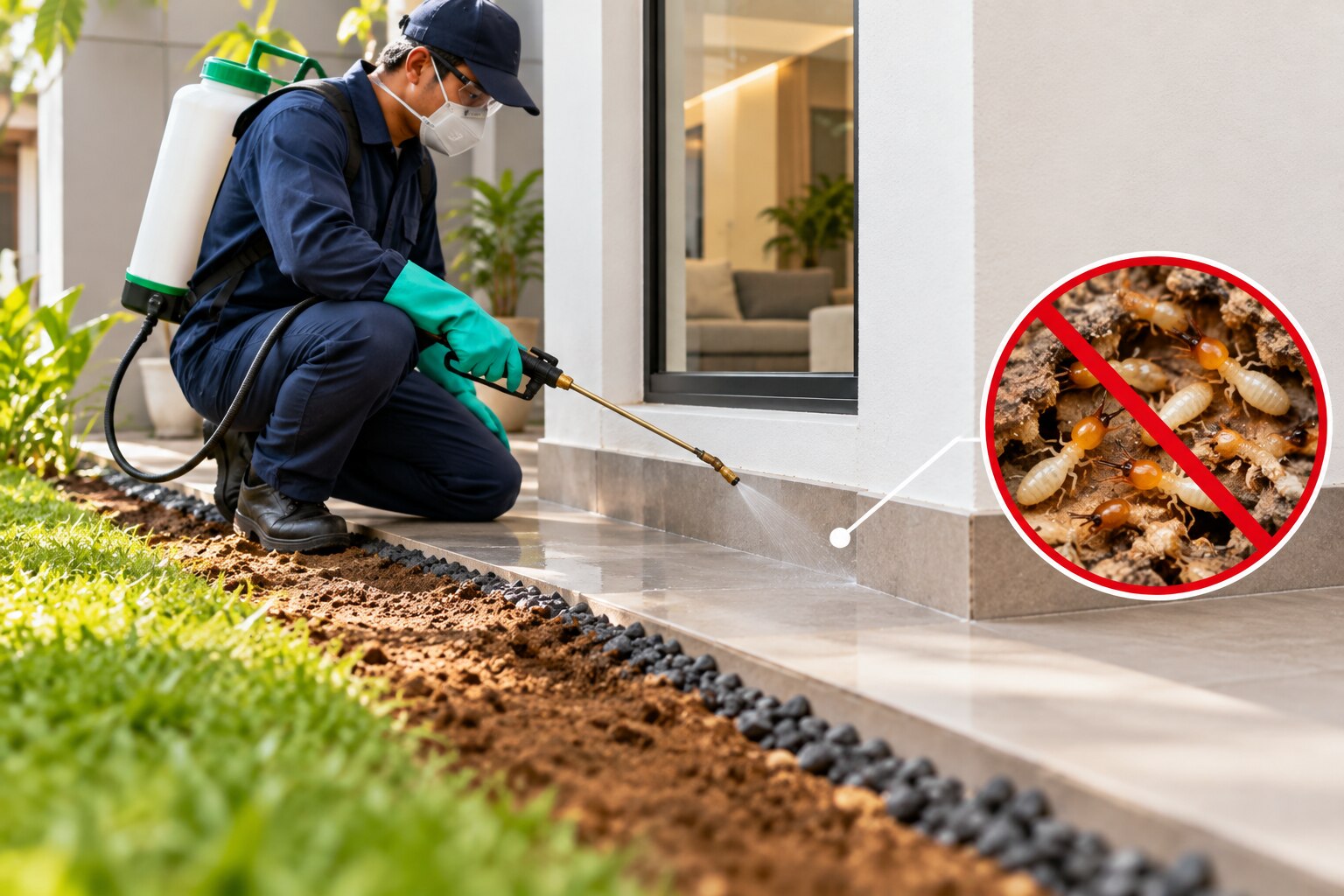
Termite prevention begins by blocking access to the building, controlling moisture and finding hidden vulnerabilities before insects become visible. By the end, you will have a practical plan for construction, routine inspections, risk-based follow-up and the mistakes that make prevention fail.
Key takeaways
- Install the termite barrier before backfilling and laying the concrete floor.
- Eliminate leaks, soil contact and stored wood beside exterior walls.
- Inspect concealed entry points more frequently in damp or high-risk locations.
- Get a professional barrier review when evidence reaches hidden structural areas.
Build the termite barrier before the concrete floor is laid
The termite barrier must be planned and installed before backfilling and before the concrete floor is laid; spraying finished rooms cannot protect routes hidden under a slab. Pre-construction termite prevention follows IS 6313, so coordinate the builder, pest professional, plumber and electrician before work starts.
1. Clear foundation trenches of timber scraps, roots and construction debris. Apply soil treatment to the trench sides, the plinth area and the ground beneath the floor, following the approved product label and application record.
2. Continue the treated zone across the floor-wall junction and around the external perimeter. The objective is a continuous chemical barrier, not separate patches that termites can bypass through untreated soil.
3. Fit sleeves around plumbing and electrical services, seal the gaps where they pass through walls or floors, and treat disturbed soil around those penetrations. Keep the plinth inspection gap visible; do not bury it under soil, paving or render.
4. Photograph the treated areas and keep the applicator’s product, batch and treatment records with the building documents. Give them to anyone carrying out later plumbing, electrical, landscaping or foundation work.
A new trench, pipe repair, crack or landscaping project can break the barrier. After such work, arrange a review and local reinstatement where treated soil or concrete was disturbed; never assume the original protection remains continuous.
Also correct leaks and drainage problems before handover, because damp foundations attract subterranean termites even when construction treatment is sound.
Remove moisture, soil contact and stored materials around the home
Persistent dampness is the biggest property condition to correct. In Thane, monsoon rain, leaking pipes, blocked drainage and damp foundations keep soil and masonry wet, giving subterranean termites a reliable route and reducing the value of surface pesticide alone.
| Property condition | Why it creates risk | Corrective action |
|---|---|---|
| Moisture beside walls | Wet soil and masonry support concealed travel routes | Repair leaking pipes, clear blocked drainage and let saturated areas dry |
| Timber touching soil | Termites can move directly from soil into door frames, boards or structural wood | Raise timber and keep soil, paving and garden fill below the inspection gap |
| Stored cardboard and wood | Paper, firewood, packing material and timber offcuts provide food and hidden access | Move them away from walls and off the building perimeter |
| Damp crawl spaces | Poorly ventilated voids hide activity and keep floor timbers wet | Improve ventilation, repair leaks and dry crawl spaces |
| Covered foundation edges | Render, soil or mulch can hide entry points at the plinth | Keep the foundation line visible for inspection |
Store firewood, cardboard and mulch on a raised rack away from the building. Remove buried wooden formwork, discarded boards and timber scraps instead of leaving them under floors, garden beds or extensions.
Do not seal your decision around visible timber alone. Termites can enter through cracks, expansion joints, pipe penetrations and utility gaps even when no wood touches the ground. Moisture control lowers the risk, but it does not remove an established colony in soil or concealed structure.
Inspect concealed entry points on a schedule based on risk
Inspect the plinth and foundation line first, then work inward through places where utilities, moisture or stored materials create concealed access. Use a torch and a probe rather than relying on a quick visual check from the room.
- Check skirting for gaps, mud deposits, soft sections and cracks at the wall-floor joint.
- Examine door frames and window frames where timber meets masonry, flooring or external soil.
- Inspect plumbing penetrations beneath sinks, behind toilets and near water heaters.
- Follow electrical conduits at wall entries, meter boxes and service cupboards.
- Open accessible cupboards and false-ceiling panels, especially beside bathrooms, kitchens and damp walls.
- Check roof or terrace leakage points, ceiling stains and areas where water remains after rain.
- Move cardboard, firewood, timber offcuts and packing material away from walls before checking behind them.
- Inspect expansion joints, foundation repairs and landscaping edges that could interrupt a soil barrier.
Set an annual inspection date for a dry, well-maintained home. Inspect every six months when the property has persistent dampness, wood or cardboard near walls, previous termite activity, a crawl space, or extensive garden work. Reinspect immediately after plumbing, electrical, drainage or foundation work because drilling, trenching and replacement pipes can break a treated barrier.
A mud tube, damaged timber or renewed moisture is a trigger for inspection now, not at the next scheduled date.
Distinguish termite evidence from ordinary wood decay and failed quick fixes
A hollow sound, blistered paint or a thin surface over a void deserves probing, even when the timber looks intact. Subterranean termites often eat from inside outward, so no sawdust or visible hole does not rule out damage.
Mud tubes in cracks or along masonry confirm termite travel, but they do not reveal the colony’s full route.
For termite damage versus wood decay, look at the pattern. Decay usually affects persistently damp wood, leaving it soft, fibrous or crumbly with fungal staining; termites can leave galleries, packed soil and a surprisingly thin outer skin.
Drywood termites live inside relatively dry timber and may eject dry, pellet-like frass through tiny holes, so they do not need mud tubes.
Use this checklist before choosing a treatment:
- Tap and probe skirting, door frames, window frames and exposed structural timber; mark hollow sections instead of treating only the damaged patch.
- Trace each mud tube toward soil, damp masonry, cracks, expansion joints and pipe penetrations. Removing the tube does not remove the concealed entry route.
- Check for leaks, blocked drains and wet foundation edges. Dry the source before relying on pesticide.
- Do not mistake a surface spray for colony control. It can kill exposed termites while leaving galleries and soil connections untouched.
- Treat bait stations as a monitoring programme, not an instant barrier; inspections and replenishment continue for weeks or months, and moving stations can interrupt control.
Know when prevention requires a professional barrier review
Arrange a professional inspection when you find mud tubes, hollow-sounding timber, discarded wings, repeated dampness, or damage at a wall-floor joint. Household prevention cannot reveal whether termites have travelled through concealed soil, service penetrations, false ceilings, or structural wood.
Renovation and water-damage triggers deserve a fresh barrier review. Arrange one after:
- Plumbing, electrical, drainage, landscaping, or foundation work disturbs treated soil or concrete.
- A leak, blocked drain, flood, or damp foundation leaves masonry or soil wet beside the building.
- Cracks open around the plinth, floor-wall junction, pipes, or cable conduits.
- Soil, mulch, stored timber, cardboard, or buried wood touches the structure.
Ask the technician to identify whether chemical barrier reinstatement is needed locally. Do not assume an older treatment remains continuous after drilling, excavation, tile replacement, or foundation repair.
Termite baiting is different from an instant barrier spray. It requires scheduled inspections, station replacement or replenishment, and patience because colony control can take weeks or months; moving stations can interrupt the programme.
Reject generic mixing instructions. Product-label dosage and Indian registration requirements must determine the chemical, concentration, application site, and re-entry precautions; chlorpyrifos, kerosene, diesel, and household insecticide mixtures are not interchangeable.
Doctors Pest Control Service 9820089331 can help trace suspected entry routes and decide whether reinstatement, baiting, or targeted treatment fits the building.
Related products
TERMITE CONTROL TREATMENT ₹10000 White ants or termites are one of the most dangerous wood destroying organisms. Termites are social insects. View product → |
 | Termite Control Service Protect your assets from expensive damage by termites with our professional Termite Control Service in Thane. View product → |
Frequently asked questions
When should a termite barrier be installed during construction?
Install and inspect the barrier before backfilling and before the concrete floor is laid, with the builder, pest professional, plumber and electrician coordinated.
What conditions around a home increase termite risk?
Leaks, damp soil, wood touching the ground, mulch against walls and stored timber near the building create routes or food sources for termites.
How often should concealed termite entry points be inspected?
Set the inspection schedule according to risk, giving closer attention to damp areas, slab edges, service penetrations and locations with previous termite activity.
How can you distinguish termite evidence from ordinary wood decay?
Termite evidence includes mud tubes, hollow-sounding timber, discarded wings and concealed damage; soft, wet or crumbly wood without these signs points more strongly to decay.
When is a professional termite barrier review necessary?
Arrange a professional review when you find mud tubes, repeated activity, damaged structural timber or suspected breaches around plumbing, electrical services or the slab.