A visible cockroach is usually a symptom of hidden harbourages, available water and food, or an entry route that remains open after spraying. By the end, you will know how to judge an effective treatment plan, what technicians should inspect, and which follow-up steps prevent a temporary kill from becoming a recurring infestation.
Key takeaways
- One spray kills exposed cockroaches, not hidden eggs, harbourages or incoming pests.
- Species identification determines bait placement, treatment products and inspection priorities.
- Baits, targeted sprays and insect growth regulators address different stages of an infestation.
- Follow-up visits, dry plumbing areas and monitoring traps help prevent reinfestation.
Why a Single Spray Rarely Solves the Infestation
A single spray treatment kills exposed cockroaches, not the population hidden behind cabinets, inside wall voids or near plumbing. Survivors continue breeding, while new cockroaches enter through drains, utility penetrations, deliveries or adjoining units.
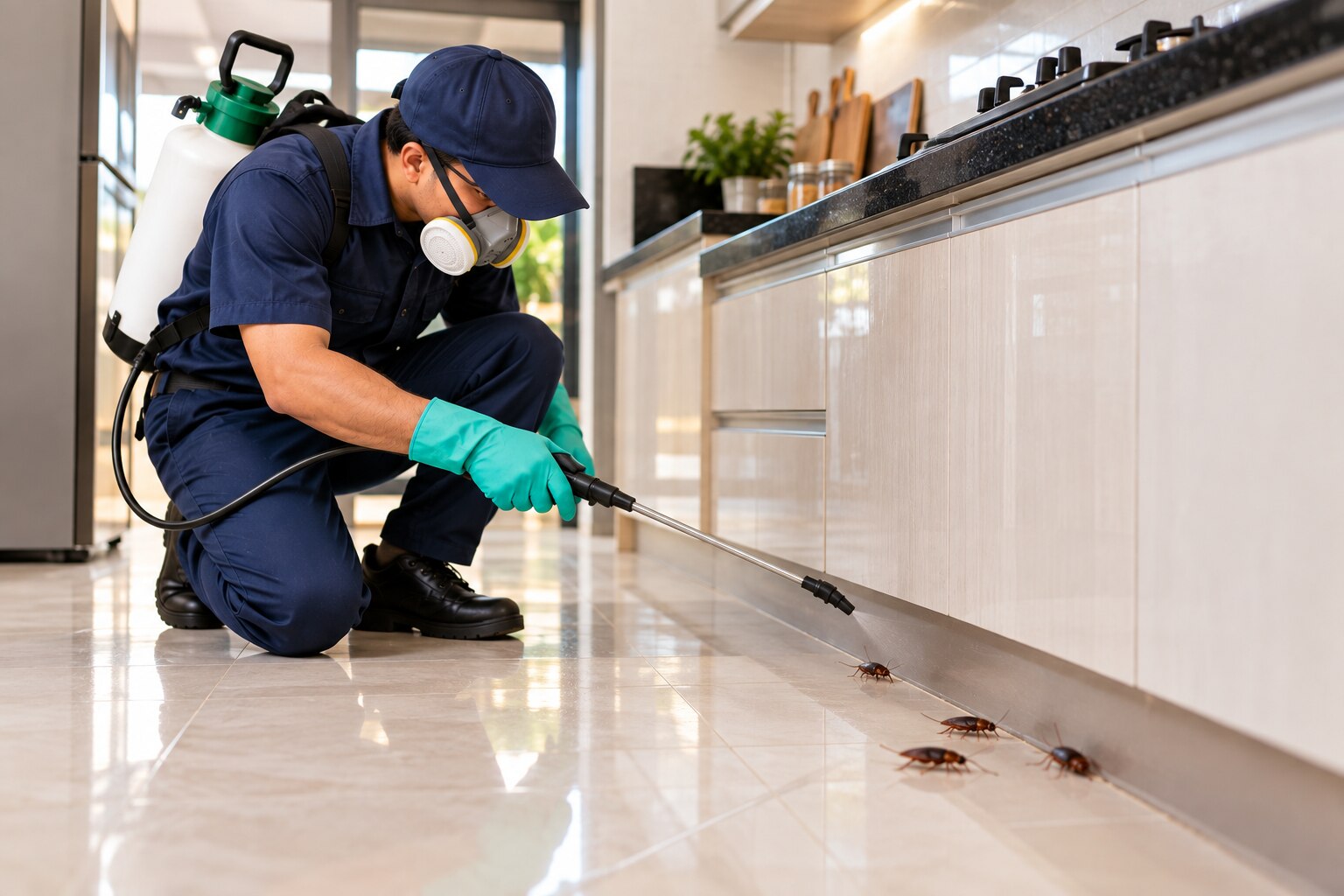
Professional control lasts longer because it uses integrated pest management, or IPM, instead of relying on one chemical pass. The technician identifies where insects live and travel, removes conditions that sustain them, treats those sites precisely and checks whether activity has stopped.
The durable plan usually includes:
- Sanitation that removes grease, food residue, rubbish, pet food and standing water. Cleaning makes bait more competitive, but it cannot reach an established infestation’s protected harbourages.
- Harbourage treatment in cracks, crevices, equipment gaps and voids, using the method suited to each location. Fogging or broad aerosol application can scatter cockroaches, miss deep hiding places and leave unnecessary residue.
- Exclusion that closes gaps around pipes, doors, drains and wall penetrations, limiting reinvasion from neighbouring spaces.
- Follow-up monitoring to find surviving nymphs, dried or contaminated bait and fresh entry activity.
Water control is equally important. Leaking taps, condensation, wet mops, floor drains and damp voids can sustain cockroaches after a kitchen appears clean.
How Inspection and Species Identification Change the Plan
A cockroach inspection should locate harbourages, food, water and entry routes, not just count insects on the floor. The technician records droppings, smear marks, cast skins, oothecae, live activity, heat and moisture so treatment reaches the source.
- Check cabinets, hinges, sinks, dishwashers, refrigerators and appliance motors for grease, warmth and hidden activity.
- Trace bathrooms, drains, pipe penetrations, utility shafts, wall cracks and false ceilings for movement between spaces.
- Inspect cartons, incoming equipment, adjoining rooms and neighbouring units for re-entry sources.
- Identify leaks, standing water, food residue and rubbish; sanitation removes competition for bait but does not clear established harbourages.
| Species | Typical clues and harbourages | Why it changes the plan |
|---|---|---|
| German cockroach | Small, fast, and concentrated around warm, humid kitchens and appliances | Prioritise tight cracks, cabinet voids, bait placement and frequent monitoring |
| American cockroach | Large, reddish-brown, and associated with drains, sewers, basements and utility penetrations | Focus on moisture control, drain routes, exclusion and larger harbourages |
| Oriental cockroach | Dark, slower-moving, and common in cool, damp basements, drains and ground-level cracks | Emphasise water reduction, structural entry points and lower-level monitoring |
Species matters because behaviour determines where to place monitors, bait and crack-and-crevice treatment, and which routes to seal. A German cockroach female commonly carries her ootheca until shortly before hatching; many residual sprays do not reliably kill it, so technicians must inspect again and treat newly emerged nymphs.
How Bait, Spray and Growth Regulators Work Together
Professionals choose by the infestation’s location, life stage and urgency—not by spraying every visible surface. The aim is to match each tool to a specific job and prevent one product from undermining another.
| Option | What it does | When it applies |
|---|---|---|
| contact spray | Kills insects reached directly or through targeted crack-and-crevice application | Use for visible activity and rapid reduction, not as the sole answer |
| gel bait | Delivers a delayed toxic dose through small, fresh placements | Use near hinges, cracks, appliance gaps and travel routes where cockroaches feed |
| insect growth regulator | Disrupts nymph development and reproduction | Use when hidden juveniles or recurring activity threaten long-term control |
| combined cockroach treatment | Coordinates bait, targeted insecticide, IGR, sanitation and monitoring | Use for established, widespread or persistent infestations |
Gel bait works poorly as one large exposed blob. Technicians place many small amounts near harbourages, then keep repellent spray away from those points; contamination or altered cockroach movement reduces feeding. Fogging also fails as a substitute for treating cracks and voids.
A combined plan becomes especially valuable for German cockroaches because their oothecae can survive residual spray and hatch later. Follow-up finds those nymphs before they mature. If bait aversion or insecticide resistance is suspected, the provider should rotate active ingredients according to label directions and confirm progress with traps rather than simply increasing spray volume.
Why Follow-Up, Water Control and Monitoring Matter
The first treatment is a checkpoint, not the finish. German cockroach oothecae can survive many residual sprays because the female carries the egg case until shortly before hatching. Nymphs can appear after activity seems to have stopped, so follow-up must find and treat new activity.
1. Schedule a follow-up inspection according to the product label and the infestation’s activity. Recheck cracks, appliance motors, cabinets, plumbing penetrations and wall voids rather than judging success from visible insects alone.
2. Use sticky trap monitoring along walls, under appliances, inside cabinets and near plumbing. Trap catches do not provide a population count, but repeated catches reveal harbourages and show whether activity is falling.
3. Complete sanitation by removing grease, food residue, rubbish, pet food and standing water. Cleaning removes allergens and competing food, while bait works better when cockroaches have fewer alternatives.
4. Finish leak repair and water control. Fix dripping taps and pipes, dry wet mops and damp voids, address condensation, and keep floor drains functional; a hidden water source can sustain cockroaches after insecticide exposure.
5. Seal routes that allow returning cockroaches to enter from adjoining units, drains, deliveries and utility penetrations. If monitoring finds live nymphs or adults, adjust the treatment instead of simply repeating the same spray.
Remove droppings, shed skins, egg cases, dead insects and contaminated debris after numbers fall. Insecticide kills pests; it does not remove the allergens that can aggravate asthma and allergic symptoms.
What to Ask Before You Hire a Cockroach Control Provider
Compare providers by the evidence behind their plan, not by the amount of chemical promised. A credible quote names the cockroach species, harbourages, entry routes, products, preparation steps and follow-up dates. Doctors Pest Control Service 9820089331 should be assessed by the same details as any provider.
| Provider check | Strong answer | Warning sign |
|---|---|---|
| Inspection | Checks sinks, drains, appliances, wall cracks, shafts and moisture sources | Quotes from room size alone |
| Treatment method | Specifies crack-and-crevice treatment, bait, dust or void treatment where each fits | Promises that fogging will reach every hiding place |
| Product strategy | Names active ingredients and explains active ingredient rotation if control fails | Repeats one product without monitoring |
| Follow-up | Schedules inspection for surviving nymphs and bait replacement | Declares success after one visit |
| Safety | Separates bait from incompatible spray and identifies treated surfaces | Sprays food-contact areas indiscriminately |
Use these treatment plan questions before you sign:
- Which cockroach species did you identify, and where are the harbourages?
- Which active ingredients and formulations will you use, and what label directions govern them?
- How will you handle oothecae that survive residual spray?
- When will you return to inspect monitors and replace consumed, dried or contaminated bait?
- What must I repair, including leaks, condensation, wet drains and pipe penetrations?
- What happens if cockroaches re-enter through adjoining units, deliveries or utility voids?
Reject a provider who substitutes broad aerosol fogging for targeted harbourage treatment or refuses to explain follow-up work in writing.
Related products
COCKROACH, ANT AND SPIDER TREATMENT COCKROACH, ANT AND SPIDER TREATMENT Ants and cockroaches pose a major threat to most households as they can contaminate the food. View product → |
GENERAL TREATMENT Gel or cockroach bait will be applied in sensitive areas such as electrical control boxes, kitchen appliances, trolleys, pantry, in inches of... View product → |
Frequently asked questions
Why does a single cockroach spray treatment rarely solve an infestation?
Spray reaches exposed cockroaches but not pests hiding behind cabinets, inside wall voids or near plumbing. Survivors continue breeding, and new cockroaches can enter through drains, utility openings, deliveries or adjoining units.
How does cockroach species identification change the treatment plan?
Different species favour different hiding places, food sources and moisture levels. Identifying the species helps the provider choose inspection points, bait locations, treatment products and prevention measures.
Why combine bait, spray and insect growth regulators?
Baits target cockroaches that feed in hidden areas, targeted sprays treat suitable cracks and harbourages, and insect growth regulators interrupt immature development. Using each method for its intended purpose gives broader control than relying on one spray.
What should you ask before hiring a cockroach control provider?
Ask how the provider will inspect and identify the species, which products and methods will be used, how you must prepare, when follow-up will occur, and how monitoring and water control will be handled.