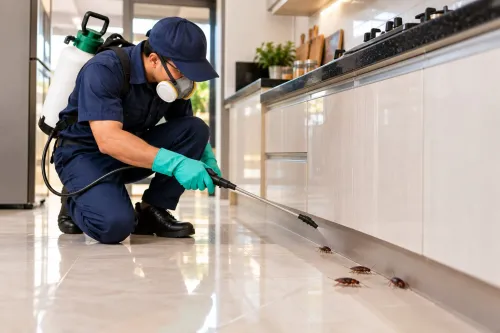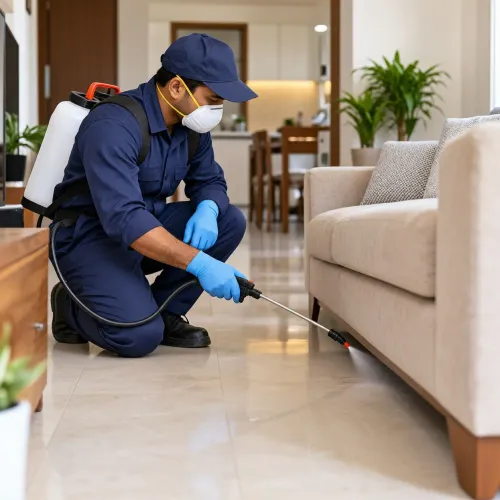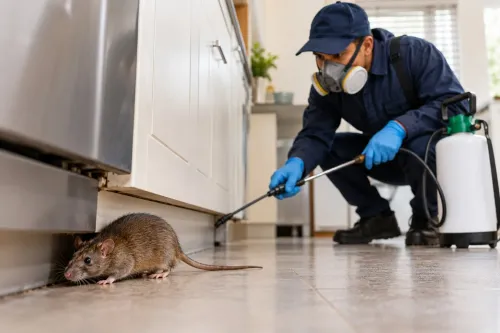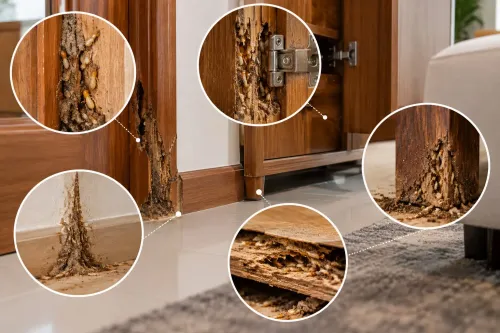

A low quotation can hide a narrow treatment area, missing follow-up visits, weak records or an unsuitable pesticide. By checking legal documents, inspecting the full risk area and comparing identical service scopes, you can select a provider that addresses the cause of an infestation rather than repeatedly treating its visible symptoms.
Key takeaways
- Verify the licence number, issuing authority, dates and responsible person.
- Require an inspection that traces pest entry, food, water and harbourage points.
- Compare visit schedules, treatment scope, exclusions and contract terms.
- Demand pesticide records, re-entry instructions and written service reports.
Verify the company, technicians and pesticides before signing
A valid commercial pest control licence is the first document to check, but it does not prove that every employee may apply chemicals. Ask for the licence number, issuing authority, validity dates and the named responsible person, then confirm those details with the relevant state agriculture or insecticide-control office.
Use this verification sequence before signing:
- Request each applicator’s identity, employment status and technician training records. Look for training covering label reading, dilution, application equipment, spill response, protective equipment and re-entry controls.
- Ask for current public-liability insurance and workers’ compensation coverage. Confirm that the policy covers pesticide application at commercial premises, not only general maintenance work.
- Require a written scope naming the target pests, treatment areas, visit schedule, exclusions, complaint route and responsible supervisor. Ask for two recent commercial references and call them.
- Request the product label or a clear photograph before treatment. Check the manufacturer, active ingredient, approved pest and site, dilution, precautions, batch number and expiry date.
- Record the insecticide registration number and ask how the product meets pesticide authorisation India requirements. In India, insecticides must be registered before import, manufacture, sale or use.
- Reject a provider that refuses to identify the chemical, substitutes an unlabelled product or promises one dilution for every room. The label controls where, how and how much the technician may apply.
Also ask for a sample service report showing product, quantity, application method, locations treated, re-entry instructions and corrective recommendations. A licence without traceable records is weak evidence of responsible work.
Demand an inspection that covers the whole pest pathway
A commercial pest inspection should trace how pests enter, feed, shelter and move through the property, not stop at the room where someone saw an insect or rodent. Ask the inspector to walk the site with a manager and mark findings on a written pest-risk map.
1. Check kitchens, food stores, washrooms, drains, garbage rooms, loading bays and waste collection points. Record food residue, leaking plumbing, standing water and damaged drain covers.
2. Inspect service ducts and false ceilings, shafts, roof spaces, electrical rooms, wall and pipe penetrations, storage areas and plant rooms. These hidden routes can connect separate floors and neighbouring units.
3. Examine doors, dock seals, fly screens, wall cracks and gaps beneath equipment. For a food premises inspection, require specific corrective actions, such as sealing a pipe penetration or replacing a broken screen, and assign responsibility for each repair.
4. Include adjacent risk zones and common areas, even when no pest activity is visible there. A treatment limited to one tenant can leave the source untouched.
Before treatment begins, request the findings, target pest, treatment locations and monitoring points in writing. The report should also state whether follow-up inspection is needed; fewer cockroaches after one visit does not prove that egg cases and hidden harbourages are gone.
If disinfection is proposed, treat it as a separate service. Ask for the product label, dilution and required contact time; a brief fogging claim is not evidence that every surface was disinfected.
Compare quotations by scope, visits and contract model
A low quote often buys less work, not better value. For a reliable pest control quotation comparison, place both documents against the same scope, target pests, visit schedule, follow-up promise, exclusions, taxes and warranty terms.
| Item | Quote A | Quote B |
|---|---|---|
| Inspection | Areas inspected and defects recorded | Limited or unspecified inspection |
| Treatment | Named pests, rooms and methods | “Full premises” without boundaries |
| Visits | Number, dates and follow-up inspection | One visit only |
| Monitoring | Traps, reporting and trend review | No monitoring included |
| Repairs | Proofing actions and responsibility assigned | Chemical treatment only |
| Contract | Monthly integrated pest management contract | One-time pest treatment |
| Warranty | Response time, exclusions and repeat-visit terms | “Guaranteed” without conditions |
A monitoring-led pest control plan costs more upfront but gives you evidence that activity is falling. A one-time pest treatment may suit an isolated problem, but it is a weak choice for recurring cockroaches, food premises or multi-unit buildings.
Check whether the quotation separates pest control from disinfection. Fogging or brief misting does not prove a surface stayed wet for the product’s stated contact time. For bed bugs, ask how many visits address eggs and adjacent harbourages; for termites, confirm whether the method creates a soil or structural barrier rather than a surface spray.
The cheapest total is meaningless if it excludes drain covers, door gaps, fly screens, waste control or emergency call-outs. Choose the quote that states who fixes each defect, what records you receive and what triggers further work.
Check the treatment plan, records and re-entry instructions
Before approving treatment, require a written account of what will be applied, where, how much and what happens afterward. A pesticide product label identifies the approved pest, site, dilution, dose and precautions; the provider must name the product, manufacturer, active ingredient, registration status, batch number and expiry date.
Ask for:
- A pest control service report recording inspection findings, treatment locations, application method, dilution and quantity used.
- Preparation instructions covering people, pets, food, utensils, aquariums and sensitive equipment.
- The product’s re-entry interval, ventilation requirements and action to take after accidental exposure.
- Follow-up dates, monitoring methods, unresolved risks and the person responsible for sealing gaps, repairing screens, fixing leaks or improving waste storage.
- Written confirmation of whether treatment is pesticide application, disinfection, or both.
“Odourless” does not mean risk-free, and staff must not be told to ignore the label or re-entry interval. If disinfection is included, request the required surface contact time; a quick mist does not prove that a premises was disinfected.
For a food site, Doctors Pest Control Service 9820089331 should be judged by whether its report connects chemical work with hygiene and proofing corrections, rather than promising that repeated spraying alone will solve the infestation. Keep every report, label and follow-up note with your premises records.
Match the service to your property and test the provider’s promises
The right model follows the property’s pest pathways, operating hours and exposure risks—not the provider’s standard package. Restaurant pest control needs scheduled monitoring, proofing and hygiene corrections; office pest control needs discreet, low-disruption treatments; warehouse pest management needs perimeter checks, loading-bay controls and monitoring around stored goods.
| Service model | What it should include | Warning that it does not fit |
|---|---|---|
| Restaurant pest control | Rodent and cockroach monitoring, drain and waste controls, door-gap and pipe-sealing recommendations | Repeated spraying without assigning structural or hygiene corrections |
| Office pest control | Targeted treatments, discreet visits, employee re-entry instructions and records for treated rooms | A blanket fogging promise for an occupied building |
| Warehouse pest management | Checks at loading bays, roof spaces, wall penetrations and storage zones, plus traps and trend records | One annual spray with no monitoring or inspection of incoming-goods routes |
| Housing society pest control warranty | Covered buildings or units, inspection frequency, response time, retreatment terms and exclusions | “Five-year warranty” with no written conditions |
Reject promises that cannot be measured. A brief mist does not prove disinfection: ask for the product label, dilution and required contact time, because surfaces must remain visibly wet for that period. Ask for a report naming the pest, locations, product, active ingredient, quantity, method and re-entry precautions.
- “100% pest-free” without a defined scope or response process
- A termite surface spray presented as a continuous barrier
- Refusal to disclose the product label, batch number or expiry date
- No written responsibility for repairs, sanitation or follow-up visits
Frequently asked questions
What should you verify before hiring a commercial pest control company?
Ask for the commercial pest control licence number, issuing authority, validity dates and named responsible person. Confirm the details with the relevant state agriculture or insecticide-control office, and check which technicians are authorised to apply pesticides.
What should a commercial pest inspection include?
The inspection should cover the whole pest pathway: entry points, food and water sources, waste areas, drains, storage zones, cracks, equipment voids and harbourage sites. Request written findings and a treatment plan linked to those locations.
How should you compare commercial pest control quotations?
Compare the areas covered, target pests, treatment methods, number and frequency of visits, follow-up terms, exclusions, emergency response and contract model. A lower price is not comparable when it includes fewer visits or a narrower scope.
What treatment records and re-entry instructions should you request?
Request the pesticide product name, active ingredient, application location, date, quantity or concentration where recorded, technician details and service findings. Get written re-entry instructions stating when staff may safely return and any ventilation, cleaning or food-protection steps required.