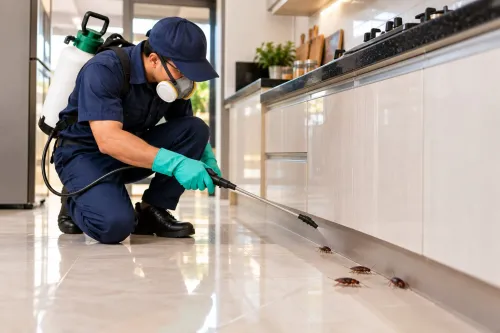
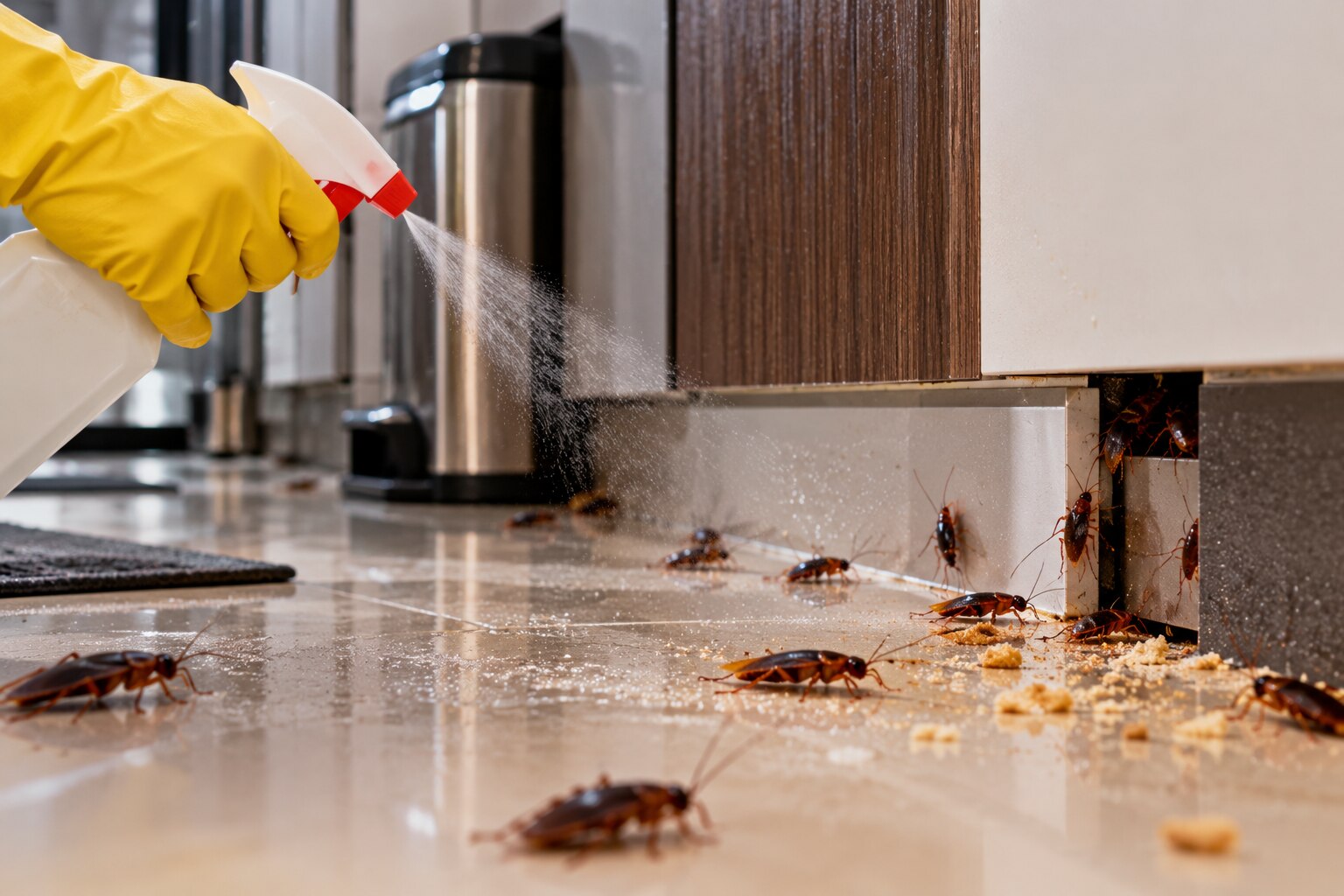
A spray can kill the cockroach you see while leaving adults, nymphs, egg cases, and harbourages untouched behind appliances, inside cabinets, or in wall voids. By separating delayed sightings from fresh reinfestation, protecting bait placements, and checking species-specific hiding places, you can identify why control failed and choose the next step with less guesswork.
Key takeaways
- A dead cockroach does not prove the infestation is gone.
- Egg cases can release nymphs days or weeks after treatment.
- Keep insecticide sprays away from cockroach bait placements.
- Use species, building conditions, and post-treatment evidence to find the source.
A dead cockroach is not proof that the infestation is gone
A DIY cockroach spray can kill the insects you notice without reaching the infestation behind them. Cockroaches spend daylight hours concealed, then emerge at night, so visible cockroaches represent only the exposed fraction of the population.
Common cockroach harbourages include:
- Cracks and wall voids
- Cabinets and appliances
- Plumbing-related spaces
- Gaps beside floors, pipes, and counters
Many household aerosols provide knockdown or a temporary kill. They work on a cockroach in the open, but spraying that insect does not treat the harbourages where the rest of the population feeds, mates, and shelters. Repellent formulations can drive survivors deeper into walls, cupboards, appliances, or neighbouring rooms.
Cleaning removes food and water, but it does not empty protected harbourages. Remove crumbs, grease, rubbish, and standing water, yet an established infestation can persist in a clean home when shelter and access remain.
Foggers are not a shortcut: their mist often fails to penetrate cracks and voids, can scatter cockroaches, and creates inhalation, residue, fire, and explosion hazards when misused.
A dead adult proves only that one insect contacted enough insecticide. It says nothing about egg cases or hidden adults left behind. A German cockroach female carries her ootheca until shortly before hatching; one case commonly holds about 30–40 eggs, allowing nymphs to appear after exposed adults die.
Population control requires breaking the breeding cycle, not merely collecting dead cockroaches.
Egg cases explain the cockroaches that appear days later
Adult deaths do not equal the end of the breeding cycle. German cockroach oothecae protect developing cockroach eggs from many surface sprays, so killing exposed adults can leave a new generation intact.
A female German cockroach usually carries her ootheca until shortly before hatching. Each case commonly holds about 30–40 eggs. Once the case opens, nymphs emerge from cracks, cabinets, appliances or other sheltered areas that the spray never reached.
Judge whether the treatment is working by looking for a sustained decline in:
- Fresh droppings
- Smear marks
- Cast skins
- Egg cases
- Live nymphs
A few quiet days prove little because hidden nymphs can appear after the adult population has dropped. One surviving ootheca can restart sightings, although the young cockroaches will not look like the larger adults you saw before treatment. Their sudden appearance creates delayed sightings that seem like a fresh infestation.
Repeat spraying without inspection can miss the source and drive surviving cockroaches deeper into harbourages. Find and treat those protected areas, then monitor for fresh evidence over the following weeks rather than judging success by the absence of adult cockroaches alone.
Spraying around bait can defeat the baiting strategy
One spray pass can make a cockroach gel bait programme fail even when the bait itself is effective. A repellent insecticide leaves an odour or residue that cockroaches avoid, so they may stop visiting a treated travel route and move deeper into cabinets, wall voids, or appliances.
Cleaning creates a different problem. Scrubbing, mopping, or spraying a degreaser over a bait spot removes the feeding trail and can cause bait contamination; spraying directly on gel bait can make it unpalatable. Do not apply aerosol insecticide, disinfectant, or cleaner on or beside an active bait placement.
Poor placement wastes the bait before any chemical issue arises. A few large blobs in exposed areas dry out quickly and attract less feeding than small bait placements tucked beside harbourages, under cabinet edges, near pipe penetrations, and along protected travel routes. Keep bait away from competing crumbs, grease, standing water, and leaking taps.
Common DIY mistakes include:
- Spraying a visible cockroach, then leaving repellent residue across the route used by other cockroaches.
- Placing bait in open, brightly lit areas where it dries or gets cleaned away.
- Using a fogger and expecting it to reach cracks, plumbing voids, and appliance interiors.
- Leaving wet sinks, floor drains, condensation, or a damp mop available overnight.
Replace bait when it is eaten, dried, or contaminated, and stop spraying around placements. A treatment that kills exposed insects but drives hidden ones elsewhere has reduced sightings, not the infestation.
The species and the building often reveal the real source
A German cockroach usually points to a warm indoor harbourage near food, such as a kitchen cabinet, appliance motor or sink unit. An American cockroach points more often to damp drains, sewers, basements or service ducts. A brown-banded cockroach favours dry, warm hiding places, including upper cabinets, furniture and electrical equipment.
| Species | Likely source | Treatment focus |
|---|---|---|
| German cockroach | Kitchens and food-preparation areas | Bait placement near cracks, appliances and cabinets |
| American cockroach | Drains, sewers, basements and pipe spaces | Moisture control, proofing and treatment of entry routes |
| Brown-banded cockroach | Dry upper spaces, furniture and equipment | Inspection beyond kitchens, including ceilings and stored items |
Water can keep a treatment failing even when the chemical is suitable. Repair leaking taps and pipes, remove condensation, dry wet mops, and address floor drains; overnight moisture sustains hidden cockroaches and weakens baiting results.
Insecticide resistance is another reason repeated spraying stops working, especially in German cockroach populations. Changing brands does nothing if both products use the same active ingredient. Check the active ingredient, follow the label, and use a different mode of action only when the product label permits it.
American cockroaches can also enter from neighbouring flats, drains, wall voids or service spaces. Install door sweeps, seal pipe penetrations, screen suitable drains, maintain proper drain traps and close structural gaps. Proofing reduces repeat entry, but it will not remove a breeding population already inside.
Use post-treatment evidence to decide whether to repeat or reset
Repeat only when evidence shows an active population, not because one cockroach appeared after treatment. Delayed emergence is more likely when sightings decline and you find small nymphs but no new contamination; a surviving egg case can hatch after exposed adults die.
Record these signs during each check:
- Fresh droppings or dark smear marks behind appliances, inside cupboards, or along wall edges
- Shed skins and live nymphs, especially in warm kitchen cracks
- New egg cases, which indicate continued breeding rather than a single late hatch
- The number and location of live cockroaches, including whether they appear only at night
Reinfestation is more likely when activity drops, then returns near a leaking pipe, floor drain, service duct, shared wall, or neighbouring flat. In a building, untreated connected spaces can refill a treated room.
A failed treatment needs a cockroach follow-up inspection when fresh droppings, shed skins, egg cases, and live nymphs continue across two checks, sightings remain widespread, or cockroaches appear in daylight.
Ask the inspector to identify the species and trace harbourage behind appliances, inside cabinets, around plumbing, and through utility penetrations instead of simply repeating the same spray.
Doctors Pest Control Service 9820089331 can assess whether the next step should target hidden harbourage, moisture, or an adjoining space rather than repeat a surface application. Repair leaks and dry sinks overnight while the evidence is being collected.
Related products
GENERAL TREATMENT Gel or cockroach bait will be applied in sensitive areas such as electrical control boxes, kitchen appliances, trolleys, pantry, in inches of... View product → |
COCKROACH, ANT AND SPIDER TREATMENT COCKROACH, ANT AND SPIDER TREATMENT Ants and cockroaches pose a major threat to most households as they can contaminate the food. View product → |
Frequently asked questions
Why do cockroaches keep appearing after DIY spray treatment?
Spray often kills exposed cockroaches without reaching those hiding behind appliances, inside wall gaps, under cabinets, or near plumbing penetrations.
Can cockroach egg cases hatch after treatment?
Yes. An egg case can remain protected in a crack or concealed surface, then release nymphs after the visible adult cockroaches have been killed.
Why should you avoid spraying near cockroach bait?
Spray can repel cockroaches from the bait or contaminate its placement, preventing them from feeding on the bait and carrying it back to harbourages.
How can you tell whether to repeat treatment or reset the approach?
Track fresh droppings, live sightings, shed skins, trapped cockroaches, and new egg cases. Persistent evidence means you need to address the source rather than repeat the same spray.
Related product
BEST PEST CONTROL SERVICES FOR BED BUGS BEST PEST CONTROL SERVICES FOR BED BUGS Bed Bugs are parasites that feed on blood. It can cause extreme itching and sleepless nights as they are nocturnal. View product → |