Itchy red marks do not prove that bed bugs caused them, and treating the skin will not remove insects hiding nearby. You will learn how to compare likely bites with similar rashes, calm the irritation safely, identify warning signs, and contain a suspected infestation while arranging proper inspection.
Key takeaways
- Bite marks alone cannot confirm bed bugs; check timing, distribution, and household evidence.
- Use a cold compress, fragrance-free moisturiser, or pharmacist-recommended anti-itch treatment.
- Seek medical care for breathing trouble, facial swelling, infection signs, or severe reactions.
- Wash bedding, reduce clutter, and avoid moving items before an inspection.
How can you tell a likely bed bug bite from another rash?
Bite marks alone cannot confirm bed bugs: mosquitoes, fleas, hives, and contact dermatitis can look similar, while some people show no visible reaction. To learn how to identify bed bug bites, consider timing and distribution, not appearance alone.
A bed bug bite pattern often means itchy red or raised spots in clusters or short lines on exposed skin after sleep, but reactions can appear up to 14 days later.
| Condition | Pattern and timing | Clues that distinguish it |
|---|---|---|
| Bed bugs | Clusters or lines on exposed skin; delayed itching is possible | Inspect the sleeping area for physical evidence |
| Mosquitoes | Separate itchy welts on exposed skin, often after outdoor or open-window exposure | A visible central puncture can occur |
| Fleas | Small, intensely itchy spots grouped around ankles and lower legs | Pets, carpets, or floor-level exposure support the suspicion |
| Hives | Raised welts that appear suddenly and change or fade within 24 hours | New areas can emerge without insect exposure |
| Contact dermatitis | Itchy or burning redness matching an area of contact | Follows a new detergent, fabric, cosmetic, or chemical |
Before treating an infestation, check mattress seams, bed-frame joints, skirting, nearby furniture, and cracks for live bugs, pale eggs, shed skins, dark faecal spots, and tiny blood marks.
Finding these signs supports bed bugs vs mosquito bites and bed bug bites vs flea bites; without them, ask a clinician or pest professional to assess the rash rather than relying on marks alone.
What can you apply or take to reduce itching safely?
For bed bug bites relief, start with simple skin care before adding medicine. Wash each area gently with soap and water, then apply a cold compress for bed bug bites: wrap ice or a cold pack in cloth and hold it on the skin for 10 to 20 minutes.
Do not scratch; keep fingernails short to reduce skin breaks and infection.
- Apply calamine lotion as directed on the label to soothe itching. A fragrance-free moisturiser can reduce dryness and irritation; use it on intact skin.
- Ask a pharmacist whether an oral antihistamine suits you. Check the label for minimum age, dose, interactions, and drowsiness warnings; children need a product and dose approved for their age.
- For hydrocortisone for insect bites, use only a low-strength product and follow its label age restriction and duration. Ask a pharmacist before using it on a child, during pregnancy, or with other skin treatments. Never apply steroid cream to broken, oozing, or infected skin.
Stop self-treating and seek medical advice if redness spreads, the area becomes hot or painful, swelling increases, pus appears, or you develop fever or severe allergy symptoms. Insecticide, kerosene, disinfectant, bleach, rubbing alcohol, and household cleaners do not belong on skin or bites.
They can cause poisoning or chemical burns and will not safely solve the infestation.
When do bed bug bites need medical attention?
Most bed bug bites heal without medical treatment, but seek care when symptoms worsen, spread, or persist instead of relying on self-care. How long bed bug bites last varies: itching and red marks can remain for several days.
A reaction can first appear up to 14 days after a bite, so a delayed mark does not prove a new bite or treatment failure.
| Situation | What it may mean | Action |
|---|---|---|
| Spreading redness, warmth, swelling, pus, increasing pain, or fever | Possible infected bed bug bites | Contact a clinician promptly |
| Facial or throat swelling, breathing difficulty, or severe allergic symptoms | Possible allergic reaction to bed bug bites | Seek emergency care immediately |
| Itching, swelling, or marks that remain persistent or worsen | A reaction needing assessment | Arrange a medical appointment |
When to see a doctor for bed bug bites depends on the pattern and severity, not simply the number of marks. Scratching can break the skin and introduce bacteria, so worsening pain or redness needs attention even if the original spots looked minor.
Treating the skin reaction does not eliminate an infestation. Old bites can stay itchy, and delayed reactions can appear after treatment; judge control through inspection and follow-up rather than bite counts alone.
What should you do at home while arranging an inspection?
While arranging an inspection, contain the problem without carrying bugs to another room. Keep sleeping in the same bed if it is safe, isolate it from walls and furniture, and do not move to a sofa or another bedroom; those moves can spread the infestation.
1. Create a bed bug inspection checklist. Examine mattress seams, bed-frame joints, skirting, furniture, and nearby cracks for live bugs, shed skins, eggs, dark faecal marks, and blood spots.
2. Start bed bug laundry treatment. Wash bedding and clothing, then dry them for 30 minutes on the hottest setting the fabric can safely tolerate. Washing alone is unreliable because ordinary cycles may not kill every bug.
3. Vacuum mattress seams, bed-frame joints, skirting edges, furniture gaps, and cracks. Empty the vacuum safely outdoors, according to its instructions.
4. Seal cleaned bedding and clothing in airtight bags or containers until the inspection and treatment are complete.
5. Place bed bug interceptors under every bed leg. Keep the bed separated from walls and other furniture so the interceptors can reveal activity and reduce climbing routes.
6. Fit a bed bug mattress encasement if you have one. It is containment, not an instant cure: keep it closed and intact, because bugs may remain in the frame, skirting, furniture, or cracks.
Do not use foggers or bug bombs, domestic hair dryers, or pesticide sprays on mattresses or rooms unless the product label specifically approves that use. Misapplied products can miss hiding places, leave dangerous residue, or cause fire and illness.
When is professional bed bug treatment the safer decision?
Seek professional help when itching has no visible bed bug evidence, when activity is severe or spreading, or when symptoms persist despite containment. Unexplained itching needs clinical assessment or a professional bed bug inspection; confirmed insects, eggs, faecal marks, or repeated signs across rooms need prompt disinfestation.
| Situation | Safer decision | Reason |
|---|---|---|
| Unexplained itching, no physical signs | See a clinician or arrange inspection | Bite marks alone cannot identify the cause |
| Live bugs, eggs, or dark marks | Book treatment promptly | Hidden harbourages can expand the infestation |
| Activity in adjoining rooms or commercial units | Inspect beyond the affected space | Shared furniture and wall gaps can carry bugs |
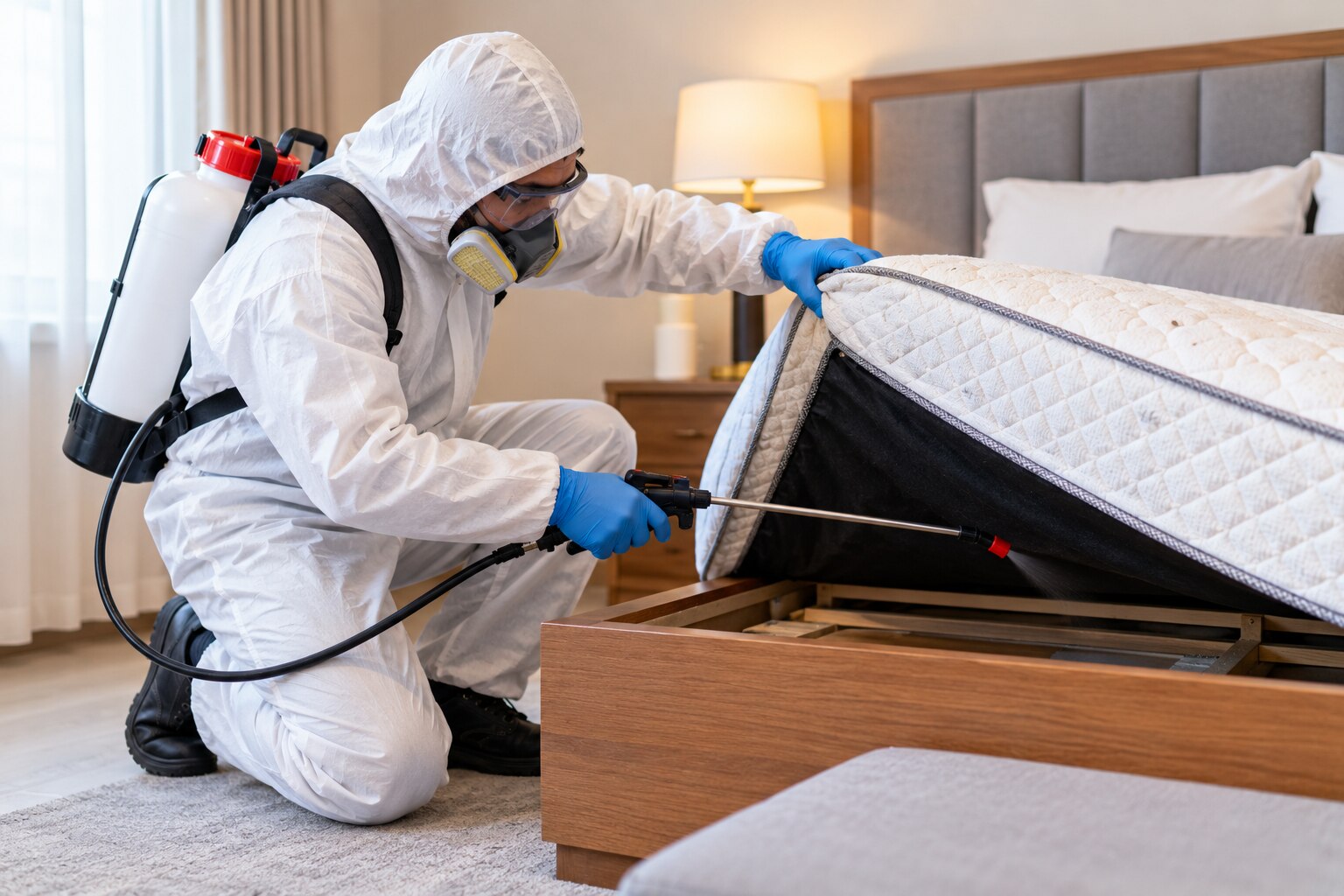
Effective integrated pest management bed bugs is not one spray. It combines inspection, clutter reduction, laundering or heat treatment of suitable items, mattress and box-spring encasements, interceptors or other monitoring, targeted pesticide use, and a bed bug treatment follow-up. Eggs and hidden bugs can survive the first visit.
Ask for written bed bug treatment preparation and re-entry instructions covering:
- Food, medicines, children’s items, and what must be removed or protected
- What not to move into another room
- Treated-area access, sleeping arrangements, and the safe re-entry time
- Whether adjoining rooms, offices, or commercial units need inspection
In Thane, Doctors Pest Control Service 9820089331 can provide a professional bed bug inspection and disinfestation assessment. Treatment addresses the source; it does not replace medical care for a skin reaction.
Related products
BEST PEST CONTROL SERVICES FOR BED BUGS BEST PEST CONTROL SERVICES FOR BED BUGS Bed Bugs are parasites that feed on blood. It can cause extreme itching and sleepless nights as they are nocturnal. View product → |
 | Bed Bugs Control Services Say goodbye to the pesky presence of bed bugs with our expert Bed Bugs Control Services in Thane. View product → |
Frequently asked questions
How can you tell a likely bed bug bite from another rash?
Bite marks alone cannot confirm bed bugs because mosquitoes, fleas, hives, and contact dermatitis can look similar. Check when the marks appear, where they occur, and whether you find bed bugs, shed skins, eggs, or dark spotting around mattress seams and bed frames. Some people show no visible reaction.
What can you apply or take to reduce itching safely?
Wash the area gently, apply a cold compress, and use a fragrance-free moisturiser. Ask a pharmacist whether an anti-itch cream or oral antihistamine is suitable for you, and follow the product label. Avoid scratching, which can break the skin and cause infection.
When do bed bug bites need medical attention?
Get urgent help for trouble breathing, swelling of the lips, tongue, or face, dizziness, or a widespread severe reaction. Contact a clinician if redness spreads, pain worsens, pus develops, fever appears, or itching remains severe.
What should you do at home while arranging an inspection?
Wash and dry bedding and clothing on the hottest setting the fabric allows, vacuum mattress seams and bed-frame joints, reduce clutter, and keep items in sealed bags. Do not move furniture or belongings to another room, because that can spread the infestation.
When is professional bed bug treatment the safer decision?
Arrange professional treatment when you find live bugs or infestation evidence, bites continue after cleaning, the infestation reaches multiple rooms, or you cannot safely inspect and treat the area. A trained pest-control provider can identify the source and specify preparation and follow-up steps.