A few ants on a kitchen counter can indicate a trail from a nest in a wall void, exterior crack, roof edge, or plumbing penetration. By the end, you will know how to identify the likely ant type, judge whether bait or contact treatment fits, prepare your property, and evaluate a professional plan by its inspection, monitoring, and follow-up measures.
Key takeaways
- Identify ant species before selecting bait or treatment.
- Trace trails to nesting sites instead of killing visible workers alone.
- Use bait first when workers can carry it back to the colony.
- Seal cracks, remove food sources, and monitor activity after treatment.
Identify the Ant Before Choosing a Treatment
Species identification determines whether treatment reaches the colony or merely kills workers at the surface. Examine body colour, size, waist shape, antennae, nesting location, and whether ants prefer sweet liquids or greasy protein.
Winged ants have elbowed antennae and a pinched waist; termites have straight antennae and a broad waist, so misidentifying them sends treatment in the wrong direction.
| Ant type | Clues you can observe | Why treatment changes |
|---|---|---|
| Tiny indoor nuisance ants | Very small, often found in kitchens, bathrooms, or wall gaps; follow narrow trails to sweet food | Use attractive sweet bait and inspect hidden voids and entry points |
| Carpenter ants | Larger ants, sawdust-like debris, damp timber, window frames, roof edges, or wall cavities | Locate moisture-damaged wood and the nest; surface spray alone leaves the colony active |
| Fire ants | Outdoor soil mounds, aggressive movement, and painful stings | Treat the mound and surrounding routes carefully; indoor bait alone will not solve the source |
| Winged reproductive ants | Winged individuals near windows, lights, roof edges, or cracks | Identify the species and inspect for a mature nest or swarm source rather than treating the wings as a separate pest |
Record where ants appear and what they eat before applying anything. A bait ignored by grease-feeding ants will not control them, while a protein or lipid bait may fail against sugar-feeding ants. Clean sweet or greasy spills, seal food, empty refuse, repair leaks, and dry damp areas; pesticide treatment cannot remove those attractants.
Species-specific inspection also reveals whether the nest lies outdoors, in a building void, or in damp timber, which determines the long-term control plan.
Find the Colony, Not Just the Visible Trail
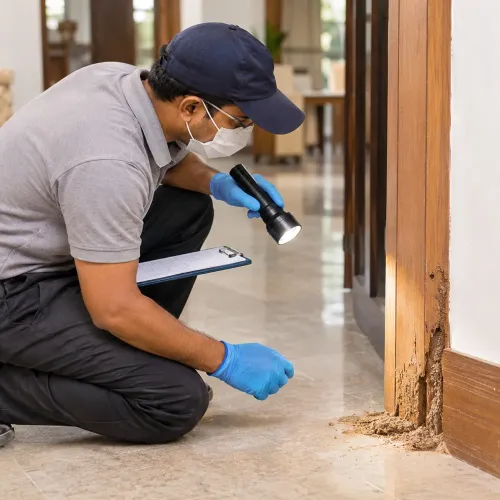
A professional looks for the point where workers disappear, not the spot where they are easiest to spray. An active ant nest produces a sustained foraging trail between food and shelter, while a trail can run through a room from a nest hidden outside, inside a wall void, under flooring, or near a service penetration.
Inspection focuses on movement and nest evidence:
- Follow the trail in both directions, especially around plumbing, cables, doors, windows, façade joints, and cracks.
- Watch traffic at different times; workers entering one opening and returning with food reveal the route to shelter.
- Check likely nesting spaces for brood, discarded wings, soil, hollow wood, or frass, depending on the ant species.
- Place a small monitoring point near the route and record whether workers recruit, carry material, or vanish into a concealed opening.
- Inspect adjoining rooms, balconies, landscaping, and wall edges for satellite nests that can maintain activity after one area is treated.
A surface spray can kill dozens of workers without reaching the queen, brood, or nest structure. The colony then replaces those workers, and another route can produce fresh activity; a first-day reduction proves only that exposed ants died.
Slow-acting bait gives foragers time to carry food back and share it with nestmates, while follow-up monitoring shows whether activity actually declines. Spraying across that route can interrupt the transfer and leave the source untouched.
Use Bait and Targeted Treatment in the Right Sequence
Use slow-acting ant bait first when workers are actively foraging and the nest has not been eliminated. Sugar-feeding ants often accept sweet liquid or gel bait, while protein-feeding ants need a protein or lipid formulation; the wrong bait gets ignored.
1. Confirm the bait matches the ant’s food preference, then place small amounts beside active trails, entry points, and suspected nest routes. Foragers carry the bait home and share it with nestmates, so slower action gives the colony time to receive the toxicant.
2. Keep bait placements free from repellent insecticides. A contact spray across the trail, or beside fresh bait, can kill workers before they carry food home and can make the colony avoid that route.
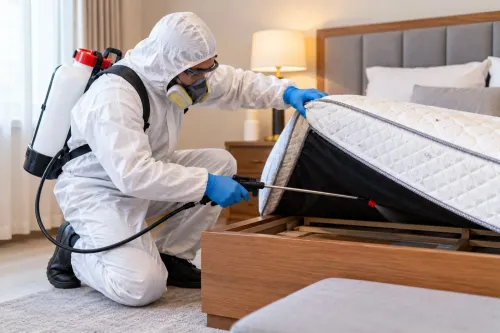
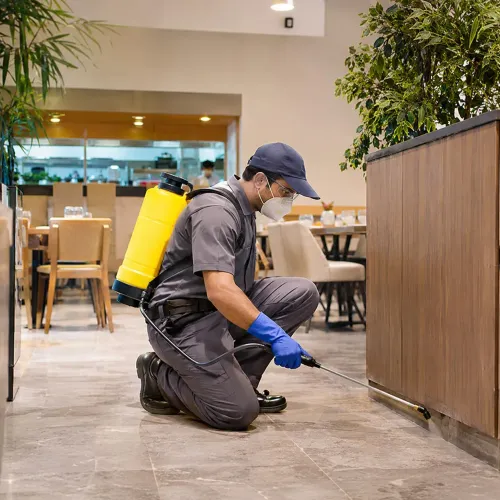
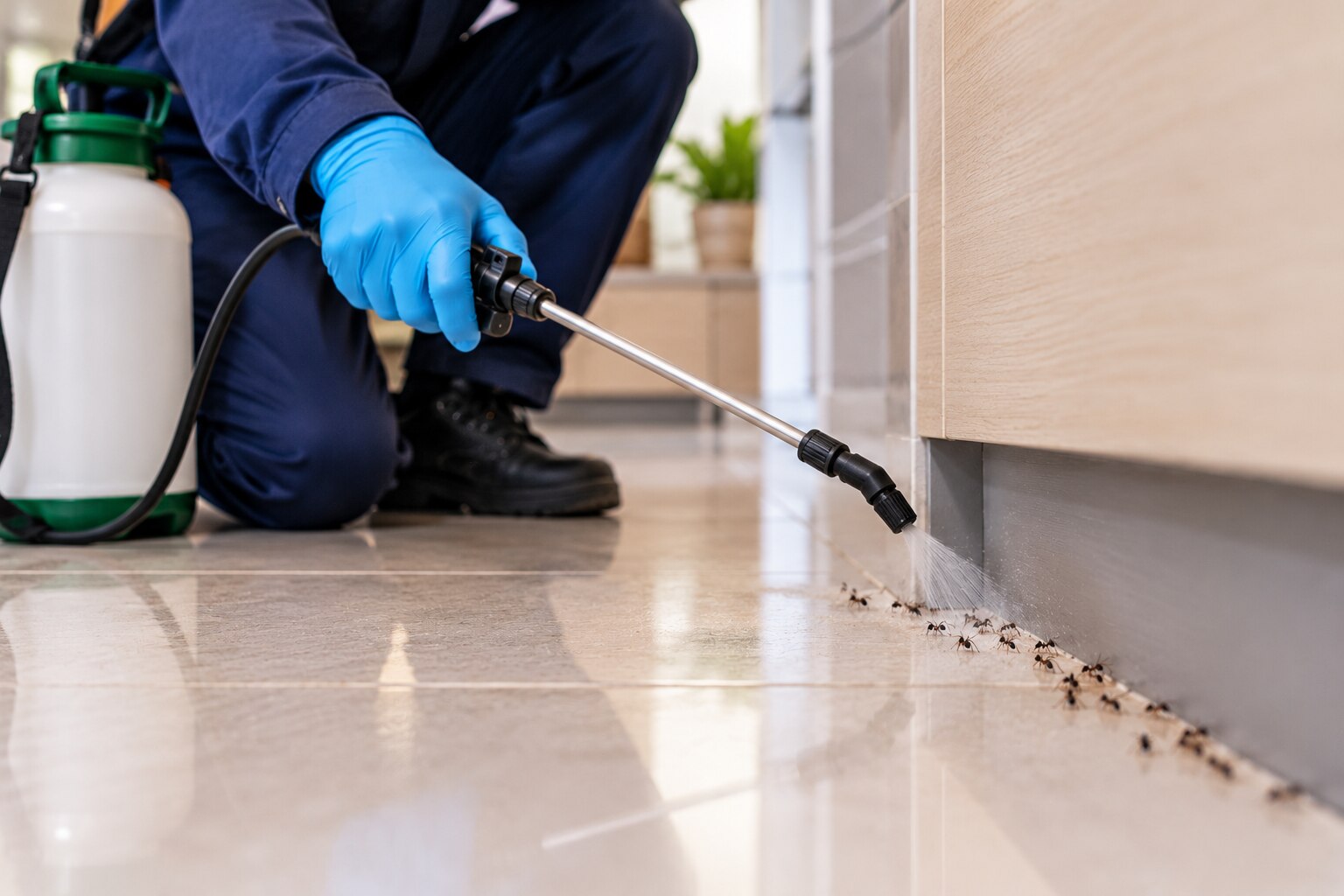
3. Apply crack-and-crevice treatment to concealed harbourages, gaps around pipes, window frames, skirting, and wall voids when ants are entering through those points. Targeted placement controls routes without coating broad surfaces.
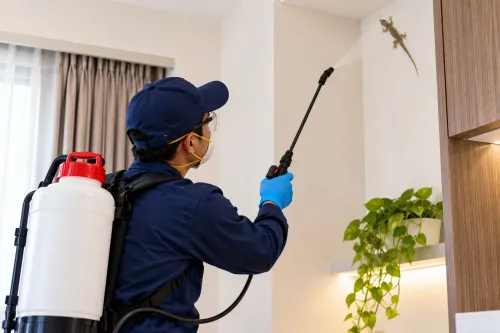
4. Use a contact spray for immediate knockdown when ants threaten a sensitive area, appear in a confined void, or need removal from a food-handling zone. It controls exposed ants, not the queen or hidden colony, so do not treat it as a bait replacement.
5. Combine methods only after separating their purposes: bait for colony suppression, crack-and-crevice treatment for entry routes, and contact treatment for urgent visible activity. Protect food, utensils, and food-contact surfaces, and follow the label for dilution, ventilation, and re-entry.
Prepare the Property and Remove Routes Back In
Before treatment, remove food, utensils, pet bowls, and children from every treatment area. Cover or remove food-contact surfaces as the pesticide label and your food-safety procedure require; keep pets away from bait placements and observe the label’s re-entry time.
1. Clean sweet or greasy spills, empty refuse, seal food in tight containers, and remove crumbs. Repair plumbing leaks, dry damp areas, and clear standing water. These food and water sources compete with bait and keep ants returning.
2. Give the technician access to skirting boards, cupboards, utility penetrations, balconies, and exterior walls. Do not wash away active trails before inspection; they help reveal ant entry points and nest locations.
3. After placement, do not spray, mop, or apply household insecticide over bait. Repellent spray beside bait can stop workers from feeding and carrying it to the colony. Leave bait stations undisturbed unless the label or technician gives different instructions.
4. Trim branches and vines away from walls, remove leaf litter and excess mulch, and keep firewood, cartons, refuse, and stored materials off the structure. These materials create shelter and bridges back indoors.
5. Complete exclusion work after the route is confirmed: seal gaps around pipes, cables, window frames, doors, and wall cracks with suitable materials. Schedule crack-and-crevice treatment only where directed, rather than spraying every visible ant.
A first-day reduction does not prove elimination. Keep monitoring, report fresh trails or winged ants, and follow the scheduled inspection; another nest or missed route needs correction.
Judge Success by Monitoring and Written Follow-Up
A first-day reduction in ants is not proof of colony elimination. Bait-based control can take several days or longer, so judge results against written success criteria: no live ants or fresh trails during the agreed monitoring period, no new activity at entry points, and no recurring signs in food-handling areas.
For ant control monitoring, require a dated record that includes:
- Inspection findings, ant identification, and mapped activity locations
- Nest indicators, entry routes, and areas left untreated
- Product name, active ingredient, dilution or dose, and application site
- Bait placements, treated cracks, exclusion work, and corrective actions
- Re-entry, ventilation, food-protection, and food-contact-surface instructions
- Monitoring results, photographs when useful, and the next follow-up inspection date
Commercial pest control records help separate treatment failure from a new route, satellite colony, or recurring moisture and food source. Ask the technician to record the number and location of monitoring points, not just “no activity observed.”
Request a second visit at the agreed interval if live ants remain beyond the product’s label or bait performance period, fresh trails appear after activity initially falls, or ants return at a different opening.
Request it sooner if workers enter food-preparation areas, the record omits the product or treated locations, or the first visit provided no measurable baseline.
Doctors Pest Control Service 9820089331 can be evaluated on this evidence: ask for a written follow-up inspection record rather than relying on a verbal assurance that spraying was completed.
Related products
GENERAL TREATMENT Gel or cockroach bait will be applied in sensitive areas such as electrical control boxes, kitchen appliances, trolleys, pantry, in inches of... View product → |
COCKROACH, ANT AND SPIDER TREATMENT COCKROACH, ANT AND SPIDER TREATMENT Ants and cockroaches pose a major threat to most households as they can contaminate the food. View product → |
Frequently asked questions
Why must you identify the ant before choosing treatment?
Species identification shows whether ants prefer sweet liquids or greasy protein and helps match treatment to their behaviour and nesting location.
How do you find an ant colony instead of treating only the trail?
Follow workers during active periods and inspect wall voids, soil, cracks, plant pots, plumbing gaps, and other locations connected to the trail.
Should you use ant bait or spray first?
Use bait when workers can carry it to the colony; avoid spraying over bait trails because repellent chemicals can stop ants from feeding and transporting it.
How can you tell whether ant control has worked?
Track activity at the same inspection points, record dates and sightings, check treated areas, and request written follow-up instructions for recurring activity.
Related product
 | General Disinfestations Service General Disinfestations Service Maintain a clean, safe, and pest-free home and working environment with our professional General Disinfestation Services. View product → |