A wall lizard in a Thane home does not automatically mean the property is dirty, structurally infested or unsafe. By separating facts from unreliable repellents, you can identify the food and entry conditions attracting geckos, clean contaminated areas safely and choose control measures that last beyond removing one visible lizard.
Key takeaways
- House geckos are not venomous and do not prove poor hygiene.
- Killing one lizard does not remove insects, entry points or hiding places.
- Avoid mothballs and eggs; seal gaps and reduce insects instead.
- Clean droppings promptly and keep contaminated areas away from food.
Are House Lizards Poisonous, Dangerous or Proof of Poor Hygiene?
Small wall lizards seen indoors are usually house geckos, often Hemidactylus frenatus. Calling one a poisonous lizard is inaccurate: these geckos are not venomous and are not known for medically significant bites. Venomous lizard safety is therefore not the main concern in an ordinary home.
A house gecko is rarely dangerous to people or pets. A cat or dog may chase or eat one, but the greater health concern is contact with droppings, which can carry Salmonella even when the gecko looks healthy.
Keep pets away from contaminated areas, wash your hands after contact, and clean food-preparation surfaces before using them.
Seeing a lizard does not prove poor hygiene. It usually means the building offers an entry route, shelter or insects to hunt; one sighting alone does not prove a structural infestation. Repeated sightings near the same window, pipe opening or ceiling gap justify an inspection, not automatic whole-room spraying.
Remove droppings with a damp disposable material rather than sweeping or vacuuming dry residue. Disinfect the surface according to the product label, and discard food that the droppings directly touched. Reducing insects and sealing accessible gaps addresses the reason geckos enter, while killing one lizard only removes that individual.
Does Killing One Lizard Solve the Problem?
No. Removing one lizard only removes the animal you saw; it does not remove the conditions attracting others. House geckos hunt insects and spiders, so repeated sightings usually indicate available prey and shelter rather than a desire to live on walls or furniture.
Night lighting strengthens that invitation by drawing flying insects toward doors, windows and balconies. The prey may include:
- Cockroaches
- Moths
- Flies
- Mosquitoes
Reducing these insects helps, but insect treatment alone cannot close an entry route. In an apartment or commercial building, lizards can arrive from neighbouring flats, ducts, corridors, balconies or shared service shafts. Seal the routes that let them follow prey indoors:
- Repair door sweeps and window screens.
- Seal gaps around pipe penetrations, frames, vents and service shafts without blocking required ventilation.
- Keep balcony and corridor doors closed near bright lights.
- Correct leaks, food residue and waste conditions that support insects.
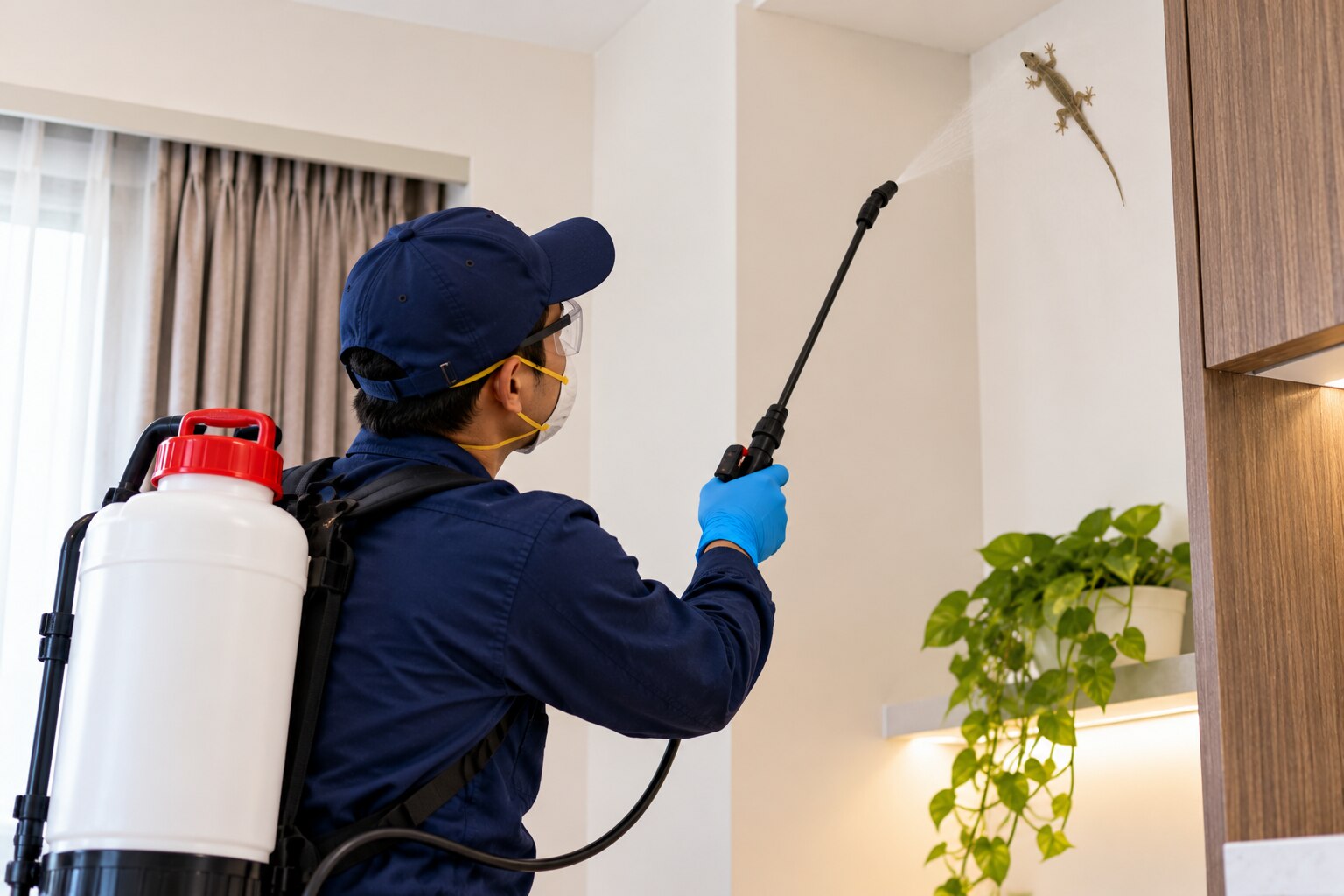
Do not spray a visible lizard with a random pesticide. Direct spraying can expose people, pets and food-contact surfaces while leaving the entry route open, and routine fogging is not justified by a few sightings. Durable control combines insect-source management, inspection, monitoring and physical exclusion; one removal never guarantees permanent results.
Do Mothballs, Eggs and Repellent Sprays Keep Lizards Away?
Mothballs do not belong in a kitchen, balcony, room or duct: they are pesticides labelled for protecting stored clothing in enclosed containers, and their vapour can expose people and pets. Tobacco, eggshells, garlic and coffee powder remedies have no dependable evidence for keeping lizards away.
| Option | Verdict | Main problem |
|---|---|---|
| Ultrasonic device | Unreliable alone | Sound performance varies with room layout and cannot seal entry routes or remove insects |
| Repellent spray | Not a control plan | Direct spraying creates exposure and does not stop access; follow the label for every indoor use |
| Glue trap | Poor choice | It can cause prolonged distress and may catch non-target animals |
| Whole-room fogging | Usually unjustified | A few sightings do not prove that broad pesticide application will solve the cause |
Judge a lizard-control product by its label and its claim, not by dramatic packaging.
- Reject “permanent removal” promises. Results fail when gaps, service penetrations or insect prey remain.
- Check that the label names the target pest, permitted indoor location, dilution and application method.
- Avoid any product that tells you to spray food-contact surfaces, use pesticides off-label or skip inspection and gap sealing.
- Treat an electronic device as an optional supplement, never as a substitute for exclusion, insect reduction and monitoring.
Can Lizard Droppings Contaminate Food, Surfaces and Air?
Throw away food that lizard droppings touched, including uncovered cooked food, fruit, bread and food in damaged packaging. Washing or reheating it is not a reliable way to undo food contamination because Salmonella can spread beyond the visible spot.
For safe cleaning and disinfection, do not dry-sweep or vacuum the droppings on a counter, dining table or food-preparation surface. Moisten the material first, then:
- Put on disposable gloves and pick up the softened droppings with paper towels.
- Seal the towels and gloves in a rubbish bag.
- Wash the surface with detergent and water to remove residue.
- Apply a disinfectant labelled for that surface and keep it wet for the label’s contact time.
- Rinse food-contact surfaces if the product label requires rinsing, then let them dry.
- Wash your hands with soap and running water after removing the gloves.
Clean nearby utensils, chopping boards and handles if residue could have reached them. Keep children and pets away while the surface is wet. Air is not normally contaminated simply because a gecko was present, but dry droppings can spread particles when swept, brushed or blown; damp removal prevents that avoidable disturbance.
What Does Effective Lizard Control Actually Include?
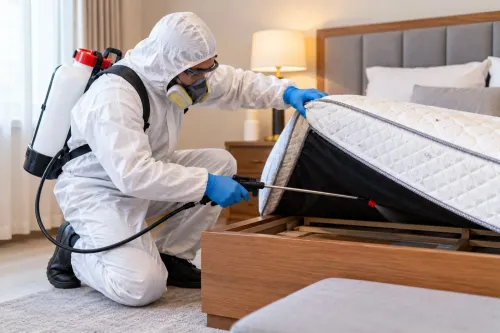
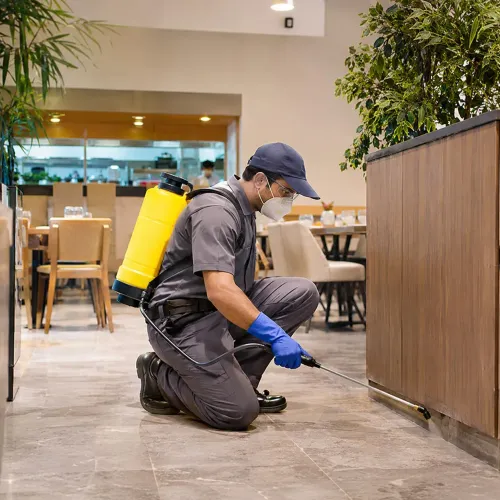
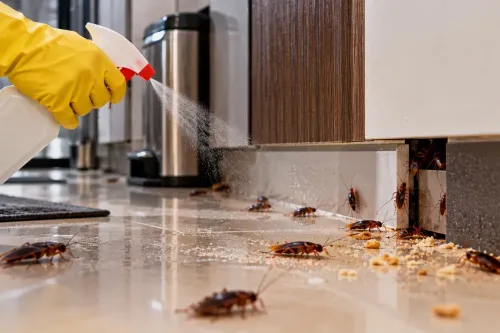
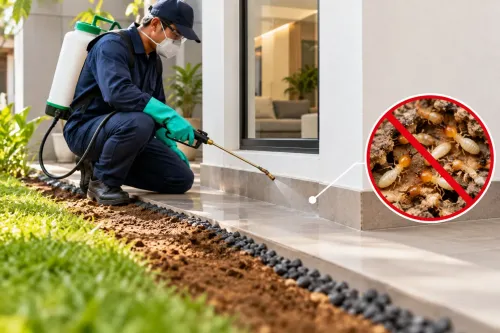
Effective lizard control is an exclusion plan supported by insect management, not simply a room spray. A lizard treatment addresses the animal and its routes into the property; cockroach treatment targets food sources that attract geckos, while mosquito treatment targets standing water and adult mosquitoes.
| Treatment | Main target | Limitation |
|---|---|---|
| Lizard control | Geckos, entry routes and shelter | Insecticide alone will not block reinvasion |
| Cockroach control | Cockroaches and other crawling insects | Fewer insects does not stop lizards entering through ducts or balconies |
| Mosquito control | Breeding water and flying mosquitoes | It does not seal building openings or remove gecko access |
The most durable work closes the routes a lizard can reuse: fit door sweeps, complete window mesh repair at edges and corners, and seal pipe and cable gaps around penetrations. Keep covered drains and service shafts secured without blocking necessary ventilation.
Turning off unnecessary balcony lights can reduce insect activity, but it is only a supporting measure.
Ask Doctors Pest Control Service 9820089331 whether an inspection will separate lizard entry points from cockroach or mosquito sources, because a generic spray can leave the actual route untouched. In a multi-unit building, neighbouring flats, corridors and open shafts also matter; no provider can honestly guarantee permanent removal while those access points remain open.
Frequently asked questions
Are house lizards poisonous, dangerous or proof of poor hygiene?
Ordinary house geckos such as Hemidactylus frenatus are not venomous, and seeing one does not prove that your home is dirty. They can still alarm people and leave droppings on walls, shelves and surfaces.
Does killing one lizard solve the problem?
No. A lizard remains indoors because it can find food, shelter and an entry route. Removing one does not address insects, cracks, vents or gaps around doors and windows.
Do mothballs, eggs and repellent sprays keep lizards away?
Mothballs are not a safe general lizard repellent, and eggs do not provide reliable control. Repellent sprays work only when their label allows indoor use and you follow the application and ventilation instructions.
Can lizard droppings contaminate food, surfaces and air?
Droppings can contaminate food-contact surfaces and should be removed with gloves and disinfectant. Do not sweep dry waste near food, because cleaning can spread dust and particles.
What does effective lizard control include?
Effective control combines insect reduction, sealing gaps around pipes and frames, repairing screens, removing clutter and safely removing visible lizards. Persistent activity calls for a site inspection and targeted treatment.