A termite inspection is a documented risk check, not a promise that a building contains no hidden activity. By the end, you will know what an annual visit should cover, how to separate active termites from old damage, which findings justify treatment, and when a property needs more than a routine inspection.
Key takeaways
- Look for mud tubes, live termites, fresh frass, and damaged wood.
- Annual inspections find moisture and access routes before damage becomes visible.
- Prioritise basements, crawl spaces, timber joins, plumbing leaks, and soil contact.
- Request photos, findings, treatment scope, product details, and licence evidence.
What does an annual termite inspection actually examine?
An annual termite inspection checks visible evidence and conditions that could support concealed activity; it does not certify that termites are absent.
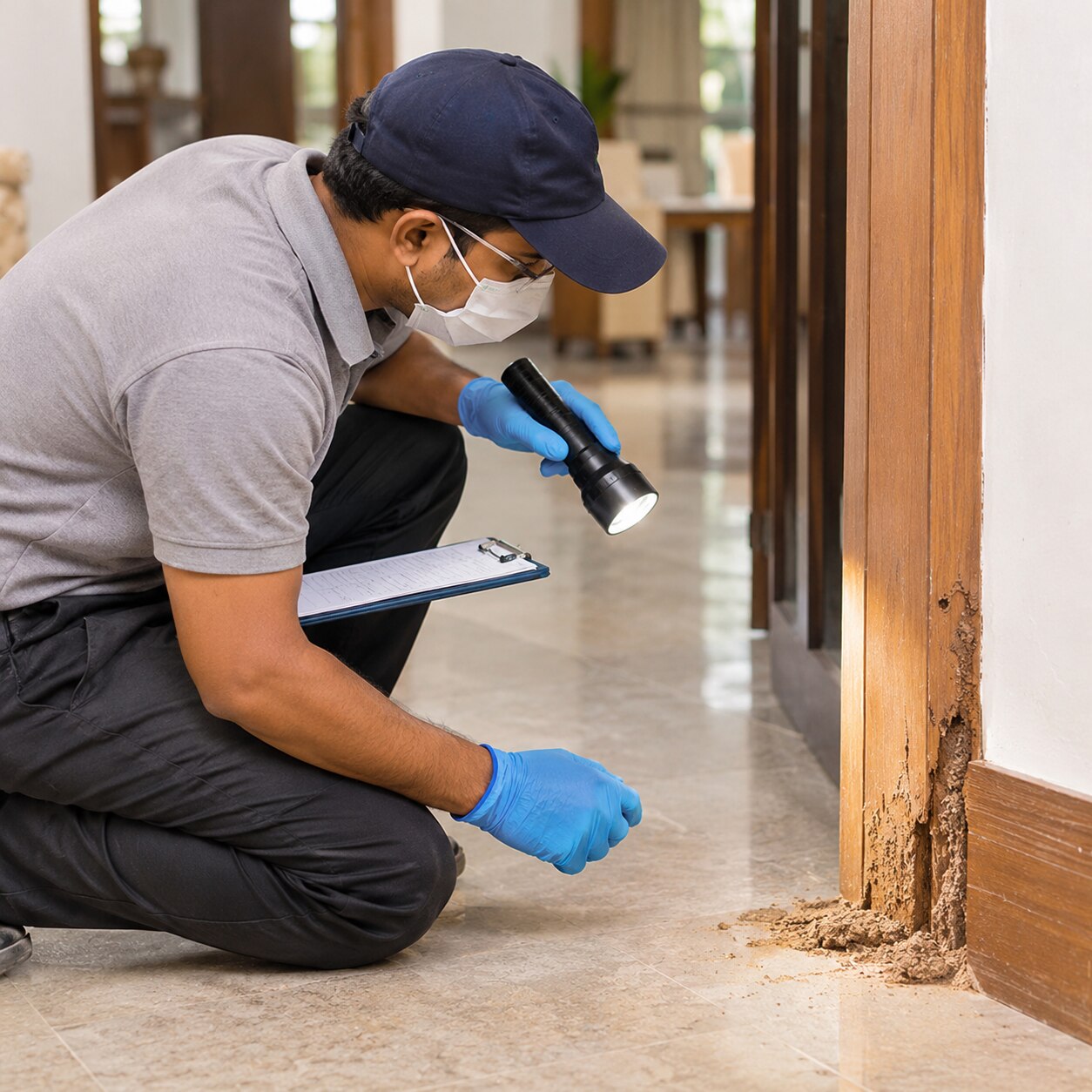
An interior termite inspection covers kitchens, bathrooms, storage rooms, offices and other areas containing wood or plumbing. The inspector should examine skirting boards, door and window frames, wooden furniture, flooring, wall edges, blistered paint, hollow-sounding timber and discarded wings.
Plumbing penetrations and electrical conduits deserve attention because termites can use gaps around services to reach wall cavities.
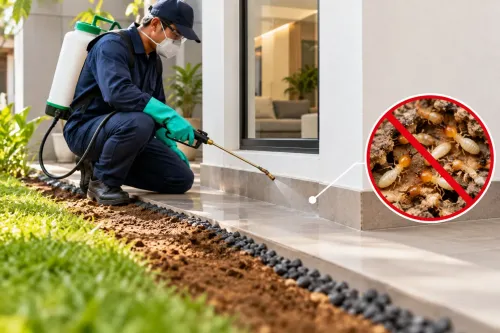
An exterior termite inspection follows the building’s perimeter and looks for mud tubes, damaged timber, cracks, damp foundations, blocked drainage and leaking taps or pipes. The inspection should also include terraces, garden edges, steps, crawl spaces where accessible, and places where soil, mulch or landscaping touches walls or wooden elements.
- Check soil-to-wall contact, timber resting on soil, stored firewood and dense vegetation against the structure.
- Inspect accessible floor voids, service ducts, expansion joints and foundation edges for concealed routes.
- Record moisture conditions near bathrooms, kitchens, downpipes, drainage lines and poorly ventilated spaces.
- Compare accessible findings with earlier photographs or a site map, noting repairs and areas that remain blocked or sealed.
Subterranean termites can remain in soil, wall cavities and floor voids without leaving visible signs. Therefore, the inspection records accessible evidence and risk conditions; it cannot prove that a hidden colony does not exist. A treatment recommendation should identify the observed evidence or risk route rather than rely on the inspection date alone.
How can you tell active termites from old damage?
Break open a small, accessible section of a mud tube and check what happens next; the tube is evidence of a concealed route, not proof that the colony is directly behind it.
- Photograph the intact tube and record its exact location before disturbing it.
- Open a short section with a tool. Look for live termites, including pale workers or darker-headed soldiers, and note whether they retreat into the wall, soil or timber.
- Check the break again during the inspection or scheduled follow-up. Rebuilding with fresh mud indicates active termites; an unrepaired, dry tube provides weaker evidence.
- Look beneath damaged wood and along nearby ledges for fresh frass, damp soil and new mud. Record discarded wings indoors, but treat them as evidence of a reproductive flight rather than proof of the colony’s location.
Hollow timber, blistered paint and old galleries need context before treatment is recommended. A hollow sound can result from old termite damage or decay, while blistered paint can come from trapped moisture; galleries may contain no active termites after an earlier infestation.
Compare the finding with live evidence, moisture readings, entry routes, wood condition and nearby soil-to-wall contact.
Spraying exposed insects or a tube can remove visible activity without stopping concealed entry. The report should distinguish monitoring from remedial treatment and explain whether the source, moisture problem or accessible timber requires action. “No live termites seen” does not mean termites are absent from inaccessible walls, floors or ceilings.
Why is annual timing better than waiting for visible damage?
Annual timing catches changing risk before termite damage becomes structural. Waiting for sagging floors, hollow beams, blistered paint or weakened skirting means concealed activity has already had time to spread through wall cavities, flooring or service penetrations.
A previous termite treatment warranty is not a substitute for inspection. Plumbing repairs, landscaping, drainage work, extensions or trenching can break the continuity of a treated soil zone. Spraying exposed termites or a mud tube with household insecticide can remove visible insects while leaving the colony and entry route untouched.
Treating only before a sale or property renovation gives you a snapshot, not protection against changes during the following year.
- Compare the current inspection with the previous report, photographs and site map. Mark new construction, excavation, leaks, blocked drainage and altered soil-to-wall contact.
- Photograph the same skirting, frames, wall edges and accessible timber from similar positions. A new mud tube, fresh damage or changed moisture reading becomes easier to recognise beside the earlier image.
- Record each finding at its exact location and label it as active evidence, old damage or a risk condition. This prevents a later visit from treating an old mark as a new infestation.
Annual records also expose gradual change that a single pre-sale check can miss. “No evidence seen” means only that accessible areas showed nothing at that visit; concealed termites can remain in soil, voids or plaster. That evidence supports a targeted treatment decision instead of automatic spraying.
Which properties need closer attention, and when is inspection not enough?
Properties with timber-to-soil contact, soil-to-wall contact, leaks, blocked drainage or landscaping against walls deserve closer attention. Poor moisture management sustains concealed activity, while older construction can leave unsealed foundations, floor voids and service penetrations.
Vacant property termite risk increases because leaks and mud tubes go unnoticed between visits. Previous termite activity also raises concern, even after treatment. A multi-unit building termite inspection needs added care around shared walls, utility routes and adjoining foundations because one unit may not contain the entry route.
| Finding | Why inspection alone is not enough | Required next step |
|---|---|---|
| Visible live termites or a fresh, rebuilt mud tube | Activity is present now, and spraying exposed insects may leave the colony and route intact | Trace the entry route and arrange targeted treatment with follow-up checks |
| Major timber damage or suspected colonies | Structural safety and colony location need assessment beyond a visual record | Obtain a treatment and repair plan |
| Active moisture from a leak, blocked drain or damp foundation | Moisture can sustain termites and undermine treatment results | Correct the source, then re-inspect and treat where evidence remains |
| Inaccessible foundations, crawl spaces or wall voids | Unseen areas prevent a reliable conclusion about activity | Define access limits and schedule invasive inspection or monitoring |
| Shared walls or connected service paths | Termites can cross property boundaries | Coordinate inspection and treatment across affected units |
Ask for a separate treatment and follow-up plan when any row applies. Wood preservatives protect reachable timber but do not replace leak repairs, soil-contact correction or concealed-entry treatment. Reinspect after plumbing, landscaping, trenching or extension work disturbs a treated zone.
What evidence should you receive before agreeing to treatment?
Before agreeing to treatment, require a termite inspection report that separates observed evidence from assumptions. “No evidence seen” does not mean “no termites present,” especially behind plaster, skirting, flooring, false ceilings or stored materials.
- Photographs of every mud tube, damaged timber, blistered surface, bait station and moisture defect, with the date.
- The exact location of each finding, such as “north bedroom skirting beside the bathroom,” rather than “inside the house.”
- Rooms, exterior walls, service penetrations and other areas inspected.
- Areas left inaccessible, including sealed cavities, covered flooring, locked rooms and obstructed foundations.
- Moisture readings, with the measurement location and the instrument reading where taken.
- Termite species identification or the identified termite group, if the evidence allows it.
- Risk conditions such as leaks, timber-to-soil contact, drainage problems, landscaping, trenching or plumbing repairs since the previous visit.
- Repairs, extensions, excavation or landscaping completed since the prior inspection, because they can break a chemical soil barrier.
- Recommended next steps, including urgency, follow-up timing and what evidence would confirm success.
Ask the provider to state which option is proposed:
| Option | What it does | What to verify |
|---|---|---|
| Chemical treatment | Treats soil, timber or entry routes | The target area and barrier continuity |
| Bait monitoring | Monitors and manages colony activity over repeated visits | Station locations, inspection frequency and replenishment |
| Wood-preservative work | Protects or treats timber | The affected wood and whether moisture repairs are also needed |
Ask a local provider such as Doctors Pest Control Service 9820089331 in Thane to document these distinctions before you approve work.
Related products
TERMITE CONTROL TREATMENT ₹10000 White ants or termites are one of the most dangerous wood destroying organisms. Termites are social insects. View product → |
 | Termite Control Service Protect your assets from expensive damage by termites with our professional Termite Control Service in Thane. View product → |
Frequently asked questions
What does an annual termite inspection actually examine?
An inspection examines accessible wood, foundations, wall-floor joints, roof or loft areas, plumbing penetrations, moisture sources, mud tubes, discarded wings, frass, and conditions that could allow concealed termite activity.
How can you tell active termites from old damage?
Active signs include live termites, moist or recently repaired mud tubes, fresh frass, hollow-sounding wood, and damage that continues across connected areas. Old damage is dry, inactive, and shows no new debris or live insects, but an inspector must confirm it.
Why is annual timing better than waiting for visible damage?
Termites can remain inside walls, floors, furniture, or structural wood while external damage stays hidden. Annual inspection helps identify moisture, soil contact, entry points, and early evidence before repairs become extensive.
Which properties need closer attention, and when is inspection not enough?
Pay closer attention to older buildings, ground-floor homes, properties with timber in contact with soil, recurring dampness, plumbing leaks, landscaping against walls, previous termite treatment, and commercial buildings with stored paper or wood. Inspection is not enough when evidence is active, concealed areas cannot be accessed, or monitoring confirms continued activity.
What evidence should you receive before agreeing to treatment?
Request a written inspection report with dated photographs, locations of evidence, affected materials, treatment boundaries, product names and instructions, safety measures, follow-up terms, and the provider’s licence or authorisation details.