


House lizards are commonly seen around kitchens, balconies, windows, utility areas, and locations where insects gather. Although many household lizards are not aggressive toward people, their presence indoors can be uncomfortable for residents, particularly when sightings become frequent.
Interest in herbal treatment for lizards and why homeowners prefer it often comes from people looking for a pest-management approach that reduces lizard activity without relying solely on conventional chemical applications.
For households in Kasarwadavali, Thane, Maharashtra, understanding what such treatment can and cannot achieve is important.
Why Lizards Enter Homes
Lizards generally enter properties because the environment provides food and shelter.
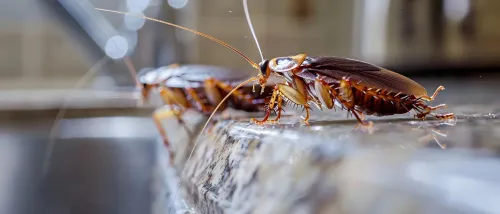
Insects are a major food source, so frequent lizard sightings can sometimes indicate that mosquitoes, flies, cockroaches, moths, or other insects are available nearby.
Common entry routes include:
- Window gaps
- Ventilation openings
- Balcony doors
- Utility ducts
- Gaps around pipes
- Openings beneath doors
- Cracks around exterior fixtures
Addressing these conditions can be as important as applying a repellent treatment.
What Herbal Lizard Treatment Is Intended to Do
Herbal or plant-derived pest-control formulations are generally used as repellent-oriented treatments rather than as a substitute for structural pest prevention.
Depending on the formulation and application method, treatment may be used around locations where lizards frequently travel or hide.
Homeowners are often interested in this approach because they prefer a lower-odour or repellent-focused option for particular indoor environments.
However, the term 'herbal' should not automatically be interpreted as completely risk-free. Any pest-control formulation should be used according to its product instructions and appropriate safety precautions.
Why Treatment Alone May Not Solve Repeated Sightings
If insects remain abundant and entry points stay open, lizards may continue finding the property attractive.
A more complete approach combines treatment with practical changes.
Reduce insect activity, install suitable screens, close unnecessary gaps, avoid keeping balcony doors open for extended periods, and remove clutter that provides hiding spaces.
Outdoor lighting can also attract insects near windows and balconies, indirectly creating feeding opportunities for lizards.
When Professional Treatment May Be Useful
Occasional lizard sightings may be managed through basic exclusion and housekeeping.
Repeated sightings in kitchens, offices, commercial premises, or multiple rooms suggest that the property should be assessed more systematically.
Doctors Pest Control Service provides pest-management services around Kasarwadavali and other Thane neighbourhoods. An assessment can help identify where lizards are entering and whether another pest problem is contributing to their presence.
Ask What the Treatment Actually Includes
Before choosing a herbal treatment, homeowners should ask what areas will be treated, whether preparation is required, what precautions apply, and whether entry-point correction is also recommended.
Claims that any single treatment can permanently prevent every lizard from entering a building should be viewed cautiously.
The most practical lizard-management strategy combines repellence with prevention. Reducing insect food sources and closing accessible entry routes can make the property less attractive, while appropriate treatment can form one part of a broader control plan.