Pests are easier to control when you identify the species, locate its food, water or entry point, and act before the infestation spreads. By the end, you will have a room-by-room inspection method, a prevention routine, and a safer way to choose between exclusion, traps, baits, sprays and professional treatment.
Key takeaways
- Record each pest finding’s location, date, size and photo before disturbing it.
- Seal cracks, repair leaks and remove food or standing water every day.
- Eliminate mosquito breeding water and seal rodent entry points at the source.
- Match treatment to the pest, then follow preparation and re-entry instructions.
Find the pest before you choose a treatment
Start with evidence, not a pesticide. Use this home pest inspection checklist with a torch, gloves and a phone camera; note the location, date and size of each finding before disturbing furniture or moving a mattress.
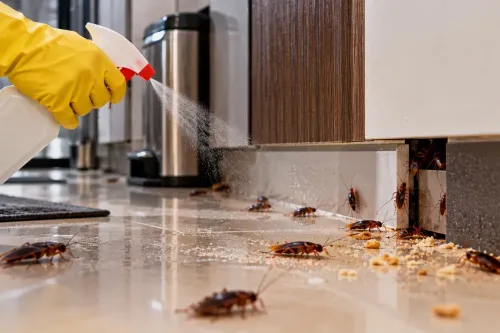
- Kitchen: inspect under the sink, behind the refrigerator and stove, inside cabinets, around grease deposits, pipe penetrations and drain openings. Look for cockroach droppings, cockroach egg cases and live insects.
- Bathrooms: check leaking sink traps, floor drains, condensation, grout gaps, pipe penetrations and the false ceiling. A musty odour, shed skins or repeated sightings indicate activity, not ordinary dampness.
- Bedrooms: examine mattress seams, bed-frame joints, skirting boards and wall gaps for bed bug spotting, cast skins or eggs. Do not carry suspected furniture into another room.
- Balcony: inspect plant trays, gutters, drain covers and stagnant containers for mosquito larvae, which wriggle at the water surface.
- Storage areas: check cartons, dark corners and clutter for rodent urine odour, droppings, gnaw marks and shredded nesting material.
- Garage: inspect wall-floor joints, stored food, boxes and the gap beneath the door for entry signs.
- Utility spaces: examine roof vents, window frames, screens and exterior-door gaps for insects, droppings or mud tubes.
| Evidence | Ordinary dirt or damage | What to check |
|---|---|---|
| Cockroach droppings | Loose soil or crumbs | Pepper-like specks clustered near warmth or water |
| Ant trails | Random marks | Repeated moving line between a gap and food |
| Termite mud tubes | Cracked plaster | Earthen tubes attached to masonry or wood |
| Bed bug spotting | Ink or rust stains | Black dots concentrated on seams and joints |
| Gnaw marks | Scratches from moving items | Paired grooves on food packs, wood or wires |
Remove food, water and entry points every day
A cockroach can survive a clean kitchen if a leaking sink trap, wet mop, condensation or grease behind the refrigerator remains available. After finding evidence, make your pest prevention routine remove food, water and shelter every day rather than relying on another spray.
- Store flour, rice, pet food and snacks in sealed containers; wipe crumbs, grease and spills before bedtime.
- Empty rubbish daily, wash the bin, and keep food waste in a lidded container.
- Repair leaking taps, sink traps and refrigerator hoses; hang wet cloths and mops to dry.
- Remove cardboard, paper piles and unused bags where insects and rodents can hide.
- Close drain openings with fitted covers, especially overnight and during periods of heavy rain.
Entry-point repairs stop new pests replacing the ones you remove. Seal pipe penetrations with suitable mortar, mesh or sealant, and close door gaps with a door sweep rather than stuffing them with cloth.
Inspect window frames, screen edges, roof vents and false-ceiling openings for daylight or loose joints. The note “window frames και?” is not a repair instruction: check every frame and screen, then patch tears and seal fixed gaps.
Do not block ventilation grilles or drainage paths while sealing. Place glue boards near repaired areas for monitoring; new droppings, shed skins or trapped insects show that an opening or food source still needs attention.
Control mosquitoes and rodents at the source
During Thane’s monsoon, mosquito control starts with water, not room fogging. Aedes mosquitoes can lay eggs in tiny collections of standing water, and those eggs cling to container walls after the water dries. Fogging may knock down exposed adults briefly, but it leaves breeding sites untouched.
Empty and scrub these places at least weekly:
- Plant saucers and buckets
- Discarded bottles, cans and toys
- Roof gutters and downpipes
- Air-conditioner trays
- Tarpaulins, construction materials and other containers left outdoors
Look for mosquito larvae before tipping water away. Scrubbing matters because rinsing alone can leave eggs attached to the sides.
Rodent proofing lasts longer than relying on poison. Mice can squeeze through openings about 6 mm wide, so close gaps where pipes, drains, doors, windows and false ceilings meet walls. Fit door sweeps, repair damaged screens and cover drain openings with metal mesh.
Use correctly placed snap traps along walls where you find droppings, gnaw marks or a urine smell. Keep traps and any bait away from children and pets; loose poison creates an avoidable hazard and can leave a dead rodent inside a wall.
Recheck sealed gaps and traps after heavy rain, because runoff can reopen weak seals or push rodents toward the house.
Match the control method to the infestation
Choose the method that reaches the pest’s hiding place, not merely the insect you can see.
| Method | Right choice | Wrong choice |
|---|---|---|
| Traps | Catching a few rodents or monitoring activity along known runways | Treating a large infestation without sealing entry points |
| Baits | German cockroaches, ants or rodents that carry bait back to a harbourage; gel bait suits cracks and crevices | Placing bait beside competing food, or spraying over bait |
| Sprays | A labelled crack-and-crevice application for exposed pests | Repeatedly spraying visible cockroaches; egg capsules can protect developing nymphs |
| Insect growth regulator | Extending cockroach control or interrupting flea development after the species is confirmed | Expecting rapid knockdown of adult insects |
| Physical exclusion | Blocking gaps under doors, pipe penetrations, screens and other entry routes | Using it alone after pests already occupy wall voids or furniture |
| Targeted treatment | A bed bug treatment based on inspection, repeated applications or a validated heat process | Using a household fogger, which can miss hiding sites and create fire or exposure hazards |
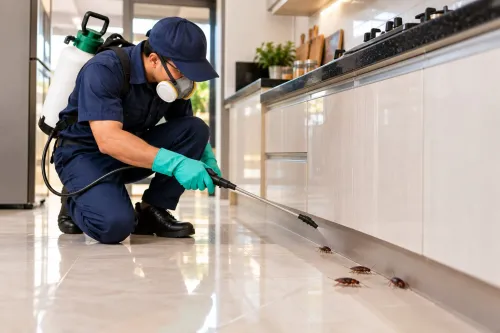
Cockroach control works better when gel bait, crack treatment and a scheduled follow-up accompany repairs to leaks and food sources. One visit rarely proves the infestation is gone.
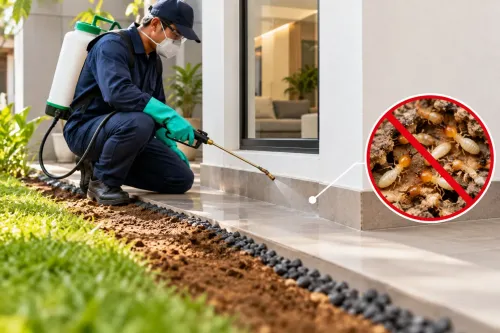
If you find termite mud tubes on a foundation, column or plumbing penetration, arrange an inspection of concealed wood, damp areas and soil contact. Breaking the tube or spraying its surface does not eliminate a colony.
For bed bugs, do not move mattresses or furniture into another room. Isolate and bag items during transport, then launder or heat-treat them according to the care label.
Prepare safely for treatment and check the result
Ask the provider to name the pesticide label, active ingredient, formulation, treated surfaces, ventilation instructions and re-entry time before work begins. A promise such as “safe after two hours” is not a substitute for those details.
1. Remove food, utensils, medicines, toys and pet bowls; cover aquariums and switch off air pumps if the label instructs you to do so. Keep children, pets and vulnerable adults away until the label permits re-entry.
2. Ask for targeted treatment of the identified harbourage, nest or entry point rather than an automatic spray in every room. Do not mix insecticide with bleach, ammonia, acidic cleaners or another pesticide; chemical combinations can release dangerous gases or increase exposure.
3. Request written instructions for ventilation, wiping treated food-contact surfaces and disposing of dead pests. Disinfection is separate: use the disinfectant’s own label and contact time instead of assuming insecticide has sanitised a surface.
4. Agree on what evidence will be checked and when. Sticky traps, fresh droppings, ant trails, mosquito larvae and live bed bugs provide better measures than a single visual inspection; bed-bug eggs can survive one application, so schedule a follow-up treatment when inspection finds activity.
Doctors Pest Control Service 9820089331 can help document the treatment area and monitoring plan; ask for the product details and safety instructions on the job record. If activity continues after the stated interval, report the exact location and evidence rather than applying another household chemical yourself.
Related products
GENERAL TREATMENT Gel or cockroach bait will be applied in sensitive areas such as electrical control boxes, kitchen appliances, trolleys, pantry, in inches of... View product → |
RODENT PEST CONTROL Rodents are mammals of the order Rodentia, from the Latin rodere “to gnaw”. View product → |
Frequently asked questions
How do I find a pest before choosing treatment?
Inspect with a torch, gloves and phone camera. Record the location, date and size of droppings, damage, insects, nests or other evidence before moving furniture or mattresses.
What daily actions prevent household pests?
Store food in sealed containers, clean crumbs and spills, empty rubbish, repair leaks, dry damp areas and seal gaps around pipes, doors and windows.
How can I control mosquitoes and rodents at the source?
Remove standing water from trays, buckets and drains, and cover stored water. Seal rodent entry points, protect food, reduce clutter and remove accessible waste.
How do I choose the right pest-control method?
Identify the pest and infestation level first. Use targeted measures such as sanitation, exclusion, traps or a labelled pesticide instead of treating every pest the same way.
How should I prepare for treatment and check the result?
Follow the technician’s or product-label instructions, remove people and pets when required, protect food and utensils, ventilate as directed, and inspect the original evidence after treatment.
Related products
BEST PEST CONTROL SERVICES FOR BED BUGS BEST PEST CONTROL SERVICES FOR BED BUGS Bed Bugs are parasites that feed on blood. It can cause extreme itching and sleepless nights as they are nocturnal. View product → |
DOCTOR'S MOSQUITO MANAGEMENT Mosquito Mosquito treatment is usually an integrated effort involving source reduction plus the use of chemical control products when needed. View product → |
 | General Disinfestations Service General Disinfestations Service Maintain a clean, safe, and pest-free home and working environment with our professional General Disinfestation Services. View product → |
COCKROACH, ANT AND SPIDER TREATMENT COCKROACH, ANT AND SPIDER TREATMENT Ants and cockroaches pose a major threat to most households as they can contaminate the food. View product → |