

Termites can remain hidden inside a property while gradually damaging wood and other cellulose-containing materials. Because much of their activity may occur behind walls, beneath flooring, inside furniture, or around structural wooden elements, an infestation is not always obvious in its early stages.
For property owners in Vrindavan Colony, Thane, Maharashtra, understanding everything you need to know about termite pest control can make it easier to identify suspicious activity and arrange an appropriate inspection before damage becomes extensive.
What Makes Termites Different From Other Household Pests
Termites live in organized colonies and can travel through concealed routes to reach suitable food sources.
Unlike pests that are easily noticed moving through open spaces, termites may remain hidden for long periods. Their presence can therefore require investigation rather than relying only on what is visible.
Common warning signs include:
- Mud-like tubes along walls or foundations
- Hollow-sounding wooden surfaces
- Damaged door frames
- Unexplained deterioration of wooden furniture
- Discarded wings
- Small cracks or changes in wooden surfaces
- Termite activity around cupboards or fixtures
These signs do not automatically confirm the extent of an infestation, but they justify closer inspection.
Pre-Construction and Post-Construction Treatment Are Different
Termite management can be approached at different stages of a building's life.
Pre-construction termite treatment is planned while a property is being built. Treatment is incorporated at appropriate construction stages to create protection around vulnerable areas.
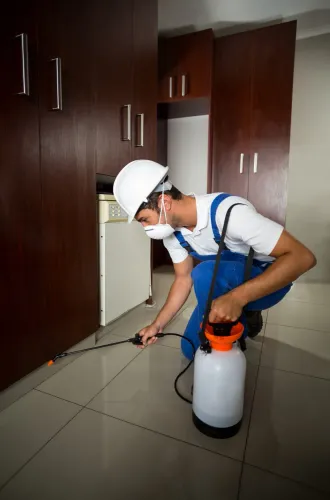
Post-construction treatment is performed in an existing building where termite risk or activity needs to be addressed. The method may vary according to construction, affected areas, access, and infestation conditions.
Inspection Should Come Before Treatment
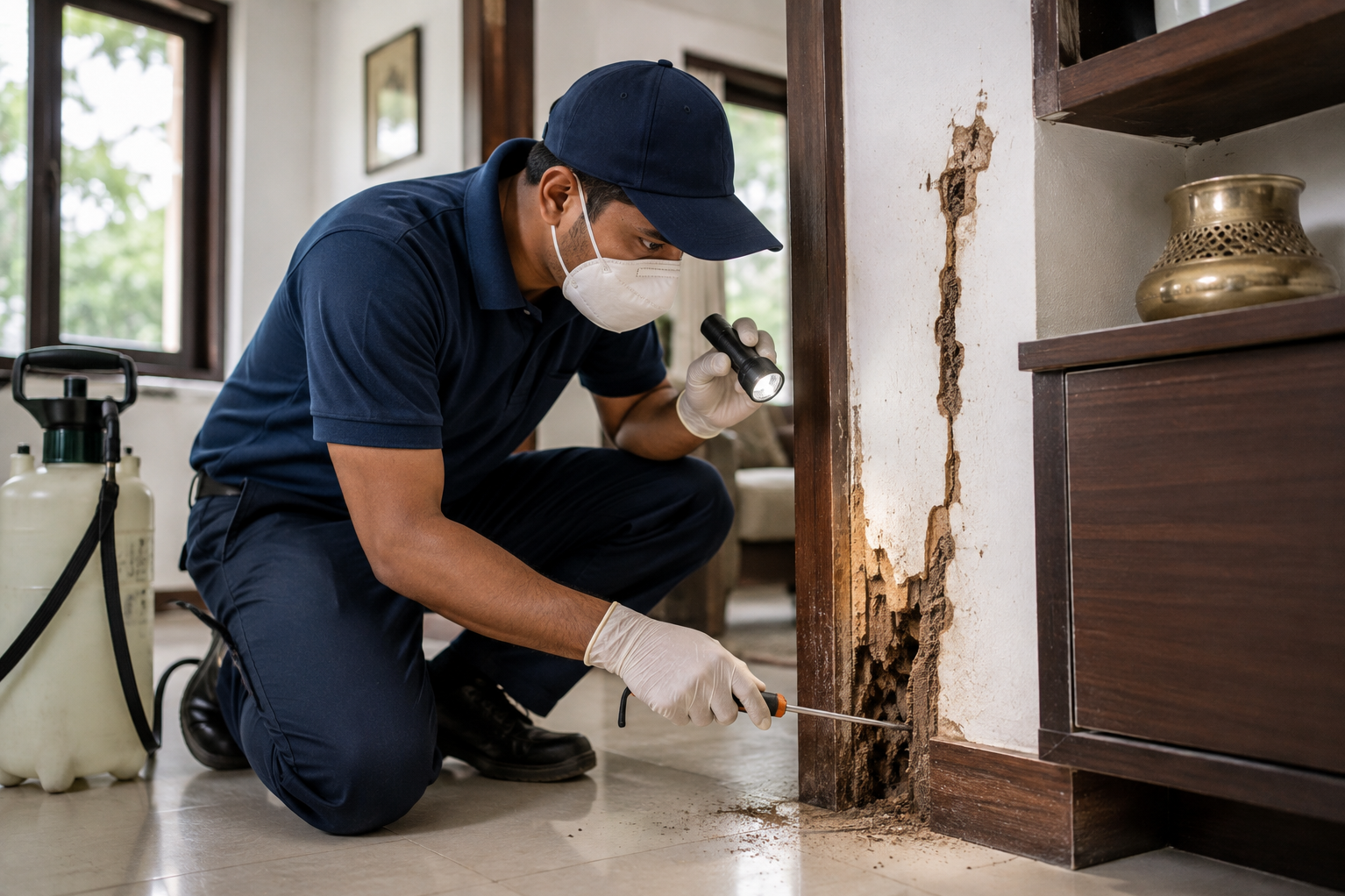
A professional termite inspection may examine wooden fixtures, wall-floor junctions, plumbing areas, door frames, cupboards, storage areas, and other vulnerable locations.
The objective is to determine where activity is occurring and how termites may be travelling through the property.
This matters because treating a visibly damaged piece of furniture alone may not address termites coming from another location.
What Happens After Treatment
Termite management should not end with the initial service. Property owners should continue watching for fresh mud tubes, new wood damage, discarded wings, and other evidence of renewed activity.
Moisture problems should also be corrected where possible because damp conditions can contribute to pest-friendly environments.
Reduce Future Termite Risk
Several property-maintenance practices can support termite prevention:
- Repair persistent leaks
- Avoid unnecessary moisture around wooden structures
- Inspect stored wood periodically
- Keep vulnerable areas accessible for inspection
- Check wooden frames and fixed furniture
- Avoid allowing scrap timber to accumulate against buildings
Properties with previous termite problems may benefit from periodic professional inspections.
Choosing an Appropriate Termite Control Approach
There is no reason to assume that every property requires exactly the same treatment. Building age, construction type, infestation location, previous treatments, and accessibility can all affect the recommended approach.
Doctors Pest Control Service can assess termite concerns in Vrindavan Colony and surrounding areas of Thane before recommending a treatment plan.
The most important principle is early investigation. Termites are easier to manage when property owners respond to warning signs rather than waiting until substantial visible damage appears.