A plant-based label does not tell you what will kill bed bugs, which life stages it reaches, or how long your family must stay away. By the end, you will know how to verify an infestation, assess an herbal treatment, prepare your home safely, and compare providers using evidence rather than the word “herbal.”
Key takeaways
- Ask for the plant-derived active ingredient, concentration, and formulation.
- Confirm bed bugs before treatment by inspecting seams, frames, and nearby cracks.
- Treat bedrooms and hiding places, not only mattresses and visible insects.
- Reinspect after treatment and document live bugs, shed skins, and fresh signs.
What does “herbal” mean in a bed bug treatment?
“Herbal” describes an ingredient source, not treatment quality or safety. A credible herbal bed bug treatment names the plant-derived active ingredient, product concentration and formulation, and identifies whether it is a repellent, contact insecticide, or fumigant. Those claims differ: repelling exposed bugs does not prove that the product kills hidden insects or eggs.
Before application, ask for:
- The product’s full name, active ingredient, concentration, and formulation
- A label showing the intended use against bed bugs and legal registration or permission for that use under India’s Insecticides Act, 1968 and associated rules
- Product-specific evidence for killing bed bugs, including egg performance and residual-effect testing
- The application locations, required re-entry interval, ventilation instructions, and precautions for children, pets, and sensitive occupants
- Follow-up inspection arrangements and the plan if live bugs remain
An unlabelled, homemade, or decanted spray fails this basic check. Essential oils can show insecticidal activity in a laboratory without eliminating an established infestation in a room. Natural ingredients can still irritate skin, eyes, and lungs or harm pets and aquatic life, so exposure depends on the active ingredient and how the formulation is applied.
Repeated use of the same active ingredient can fail because bed-bug populations commonly resist some pyrethroids. A sound programme explains its active ingredients and combines treatment with inspection and follow-up rather than simply increasing the dose.
How do you confirm bed bugs before treatment?
Skin marks do not confirm bed bugs. Fleas, mosquitoes, contact dermatitis, scabies and allergic reactions can look similar, while some people show no reaction to bed bug bites. Confirmation requires finding the insect or physical signs in its hiding places.
1. Start a bed bug inspection at the mattress piping, bed-frame joints, headboard, skirting boards and nearby cracks. Extend it to sofa seams, drawers, electrical fittings and wall gaps; use a torch and lift fabric edges carefully.
2. Look for live reddish-brown, flattened insects about 4–7 mm long, pale nymphs, translucent shed skins, blood smears and black faecal spotting. Bed bug eggs in seams are pearly white, about 1 mm long, and glued to surfaces.
3. Check alternatives at the same time. Fleas are smaller, dark and mobile, often jump, and leave pepper-like flea dirt around pet bedding or ankles. Carpet beetle larvae are hairy and leave bristly shed skins, but they do not feed on blood. Mosquitoes leave no insects, eggs or faecal marks in bed seams.
4. Treat a bat bug finding differently: bat bugs closely resemble bed bugs and may require microscopic identification. Inspect for bats, droppings or a roost before sealing openings, because removing the host can drive bugs indoors.
Do not approve treatment from bites alone or from one dark speck. Photograph evidence, collect an insect in a sealed container, and inspect adjoining rooms when apartments or shared walls are involved.
What should a safe herbal treatment protocol include?
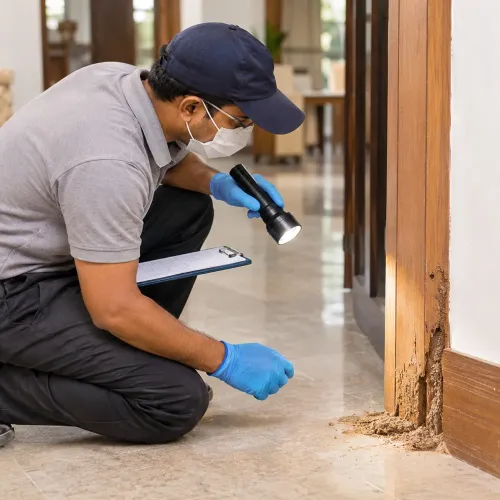
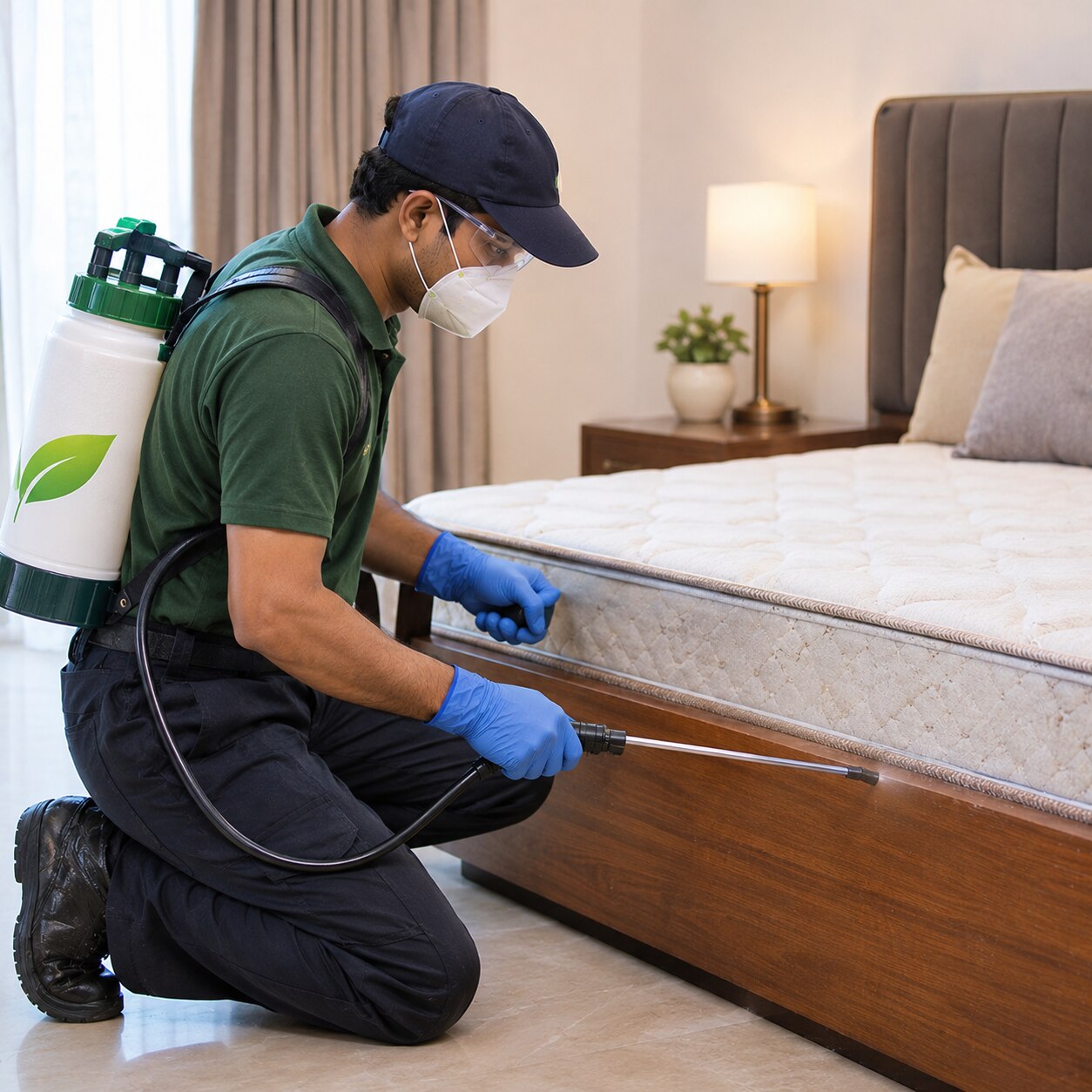
A safe herbal bed bug treatment protocol begins with an inspection, not an automatic spray. The technician should check mattress seams, bed frames, headboards, skirting, sofa joints, electrical fittings, cracks, and adjoining rooms or units, then record evidence and harbourages.
- Before application, obtain the product name, plant-derived active ingredient, concentration, formulation, treated surfaces, and label instructions. “Herbal” alone does not identify exposure or effectiveness.
- Confirm whether the product is a contact insecticide, a repellent versus fumigant, or another formulation. A repellent can drive bugs into new hiding places, while a fumigant requires specialised controls and is not an ordinary room spray.
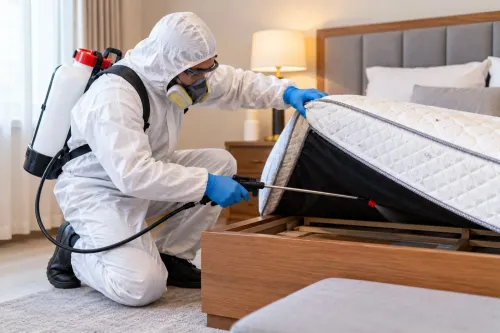
- Remove people, children, older adults, pregnant people, pets, birds, and fish according to the label and written provider instructions. Do not permit spraying on mattresses, bedding, skin, food surfaces, or clothing unless the label specifically allows it.
- Record the drying period, ventilation method, and re-entry interval. Keep the room closed during application, then ventilate as directed; re-enter only after treated surfaces are dry and the stated interval has passed.
- Arrange follow-up inspection and monitoring. One application can miss eggs and bugs hidden inside frames, skirting gaps, sofas, or wall cracks, so repeat treatment or a different active ingredient may be needed; increasing the dose or repeating a failing pyrethroid is not a safety plan.
Ask for written laundering, disposal, spill, and emergency-contact instructions before treatment. The service should not promise that routine spraying prevents a specific infectious disease.
How should you prepare bedding, clothing, rooms, and pets?
Remove clutter without carrying it to another room; relocation spreads bed bugs. Use this bed bug preparation checklist:
1. Bag bedding, clothing, curtains, soft toys, and other movable fabric items before treatment. Seal clean items in new plastic bags or lidded containers until the room is cleared for re-entry.
2. For laundering bed bug items, wash according to the care label, then use dryer heat on the highest safe setting. Washing alone is less dependable. Keep each fully dry load sealed immediately.
3. Leave heavy furniture in place, but pull beds, sofas, and cabinets away from walls if the provider requests access. Do not dismantle furniture or remove skirting boards unless instructed.
4. Remove food, medicines, toiletries, children’s toys, pet bowls, and loose personal items. Cover aquariums, switch off air pumps only if the product label requires it, and ask for instructions before treatment.
5. Take dogs, cats, birds, reptiles, and other pets out of the treatment area. Remove their bedding and return them only after the stated re-entry time has passed, all surfaces are dry, and ventilation is complete.
6. Do not install a mattress encasement before inspection because it can hide evidence. After treatment, use a fully zipped encasement on the mattress and box spring, keep it intact, and leave it in place for about a year.
7. After treatment, leave treated surfaces untouched. Do not wash, vacuum, or move sealed items until the provider’s instructions permit it.
How do you compare providers and confirm that treatment worked?
Reject any provider who offers an automatic spray, refuses to name the active ingredient, or promises to prevent an infectious disease. Bed bugs are not known to transmit disease, and “herbal” does not identify a treatment’s concentration, formulation, or exposure risk.
Write these bed bug service questions before you compare quotes:
- What is the product name, active ingredient, concentration, and registration or legal-use status under India’s Insecticides Act, 1968?
- Can you provide the product label, safety directions, application locations, re-entry interval, ventilation instructions, and precautions for children, pregnant people, older adults, pets, fish, and birds?
- Which rooms and harbourages will you inspect, and what evidence will confirm the insect is a bed bug?
- When is the follow-up inspection, what will you monitor, and what happens if live bugs or eggs remain?
Use the same checklist with Doctors Pest Control Service 9820089331; a clear written answer is more useful than a “safe” or “natural” claim.
| Option | What it means | What to verify |
|---|---|---|
| Herbal contact product | Kills exposed insects; hidden bugs and eggs can survive | Active ingredient, label, and evidence for bed bugs |
| Heat or steam | Uses lethal heat or direct steam instead of residual pesticide | Equipment coverage, temperature monitoring, and hidden harbourages |
| Integrated bed bug management | Combines inspection, preparation, monitoring, targeted treatment, and repeat visits | Follow-up inspection, interceptor traps, and a documented retreatment plan |
A single visit does not prove control. Do not judge success by fewer bites alone; require inspection evidence and monitoring results.
Related products
BEST PEST CONTROL SERVICES FOR BED BUGS BEST PEST CONTROL SERVICES FOR BED BUGS Bed Bugs are parasites that feed on blood. It can cause extreme itching and sleepless nights as they are nocturnal. View product → |
 | Bed Bugs Control Services Say goodbye to the pesky presence of bed bugs with our expert Bed Bugs Control Services in Thane. View product → |
Frequently asked questions
What does “herbal” mean in a bed bug treatment?
It describes the ingredient source, not the treatment’s safety or effectiveness. Ask whether the product repels, kills on contact, or fumigates, and request its active ingredient, concentration, and formulation.
How can you confirm bed bugs before treatment?
Inspect mattress seams, box springs, bed frames, headboards, cracks, and nearby furniture for live insects, shed skins, eggs, dark spotting, and other matching signs.
How should you prepare your home for herbal bed bug treatment?
Follow the provider’s written instructions. Seal or launder bedding and clothing as directed, clear access to hiding places, remove people and pets during application, and observe the stated re-entry time.
How do you know whether treatment worked?
Reinspect the bed, frame, surrounding cracks, and furniture for live bugs and fresh signs. Ask the provider how many follow-up inspections are included and what evidence confirms control.