

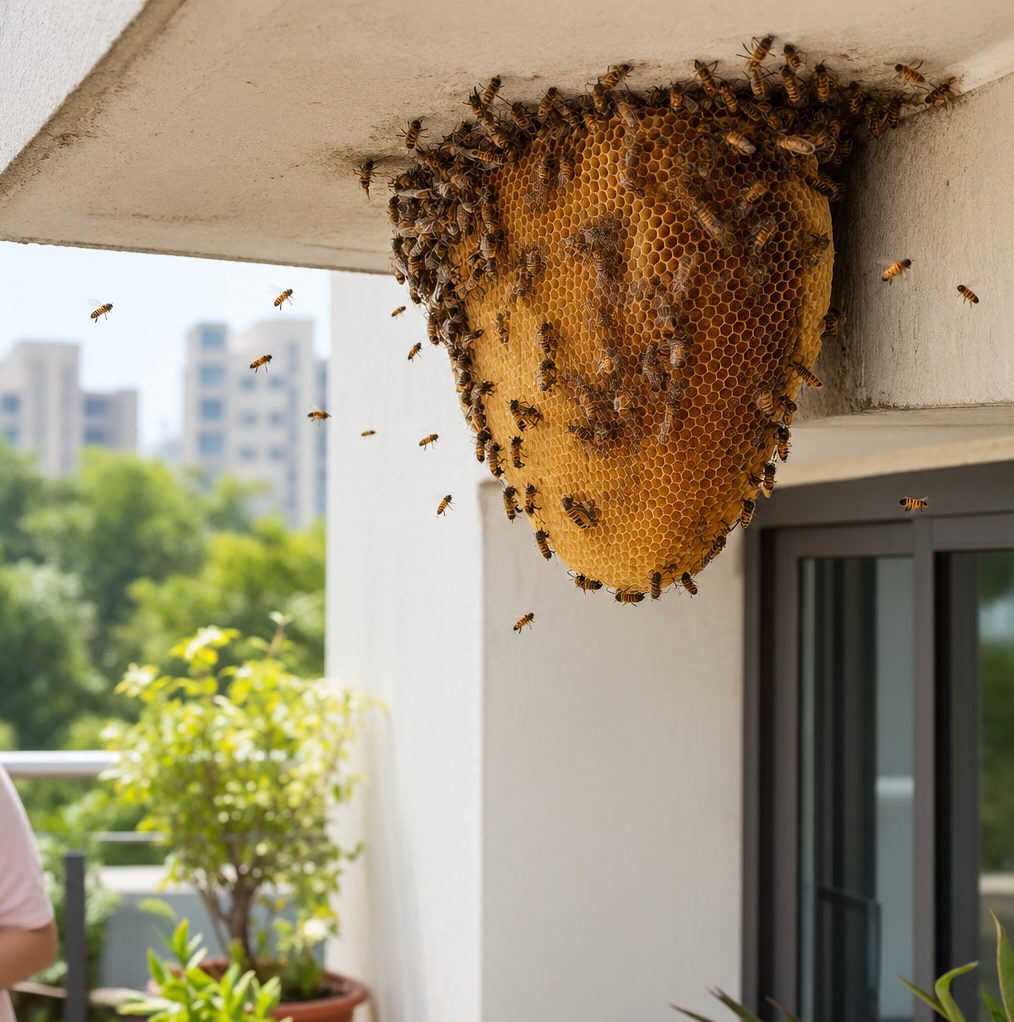
Discovering a honeycomb or active bee colony near a balcony, window, terrace, roof, tree, or building exterior can be unsettling. The first reaction may be to knock it down, spray it, or try to remove it before it becomes larger. That can create unnecessary risk.
Knowing what to do if you find a honeycomb near your home is especially important when the colony is close to entrances, children's areas, pets, or frequently used spaces.
Residents around Majiwada, Thane, Maharashtra, should first assess the situation from a safe distance rather than disturbing the bees.
Do Not Disturb the Colony
Avoid hitting, shaking, burning, spraying, or throwing water at an active colony.
Sudden disturbance can trigger defensive behaviour. Keep children and pets away and prevent people from approaching simply to inspect or photograph the nest closely.
If possible, temporarily limit use of the immediate area.
Observe the Location From a Distance
The location of the colony affects the potential risk.
A colony high on an isolated tree may present a different situation from one positioned directly above a doorway or next to a frequently used balcony.
Consider:
- How close it is to people
- Whether bees are entering indoor spaces
- Whether the area is frequently used
- Whether anyone nearby is especially vulnerable to stings
- Whether the colony is inside a structural cavity
- Whether removal can be accessed safely
Do not attempt to climb to inspect a high colony.
Avoid Blocking an Active Entry Point
When bees appear to be entering a wall cavity, roof gap, vent, or another opening, simply sealing the entrance while the colony is active may create additional problems.
The insects may seek alternative routes, including routes toward indoor areas.
An experienced professional should assess concealed colonies before openings are sealed.
When Professional Assessment Makes Sense
A colony near an entrance, balcony, workplace, children's play area, or other high-traffic zone deserves prompt attention.
Professional handling is also preferable when the honeycomb is difficult to access or when residents cannot determine the extent of the colony.
Doctors Pest Control Service can assess honeycomb-related concerns in Majiwada and surrounding parts of Thane and advise on an appropriate approach based on the location.
What to Do After Removal
Once the immediate problem has been addressed, inspect the area for openings or conditions that may encourage future nesting.
Depending on the location, maintenance may include repairing damaged exterior surfaces, closing suitable gaps after confirming they are inactive, and periodically checking sheltered sections of the building.
Residential societies should also inform maintenance teams when bee activity is repeatedly noticed around common areas.
Treat Stings Seriously When Necessary
Most people experience local pain and swelling after a bee sting, but severe allergic reactions can be medical emergencies.
Difficulty breathing, widespread swelling, dizziness, or other severe symptoms after a sting require urgent medical attention.
Finding a honeycomb does not mean residents should immediately attempt removal themselves. Keeping a safe distance, avoiding disturbance, controlling access to the area, and obtaining suitable professional guidance can reduce unnecessary risk while allowing the situation to be handled more carefully.