

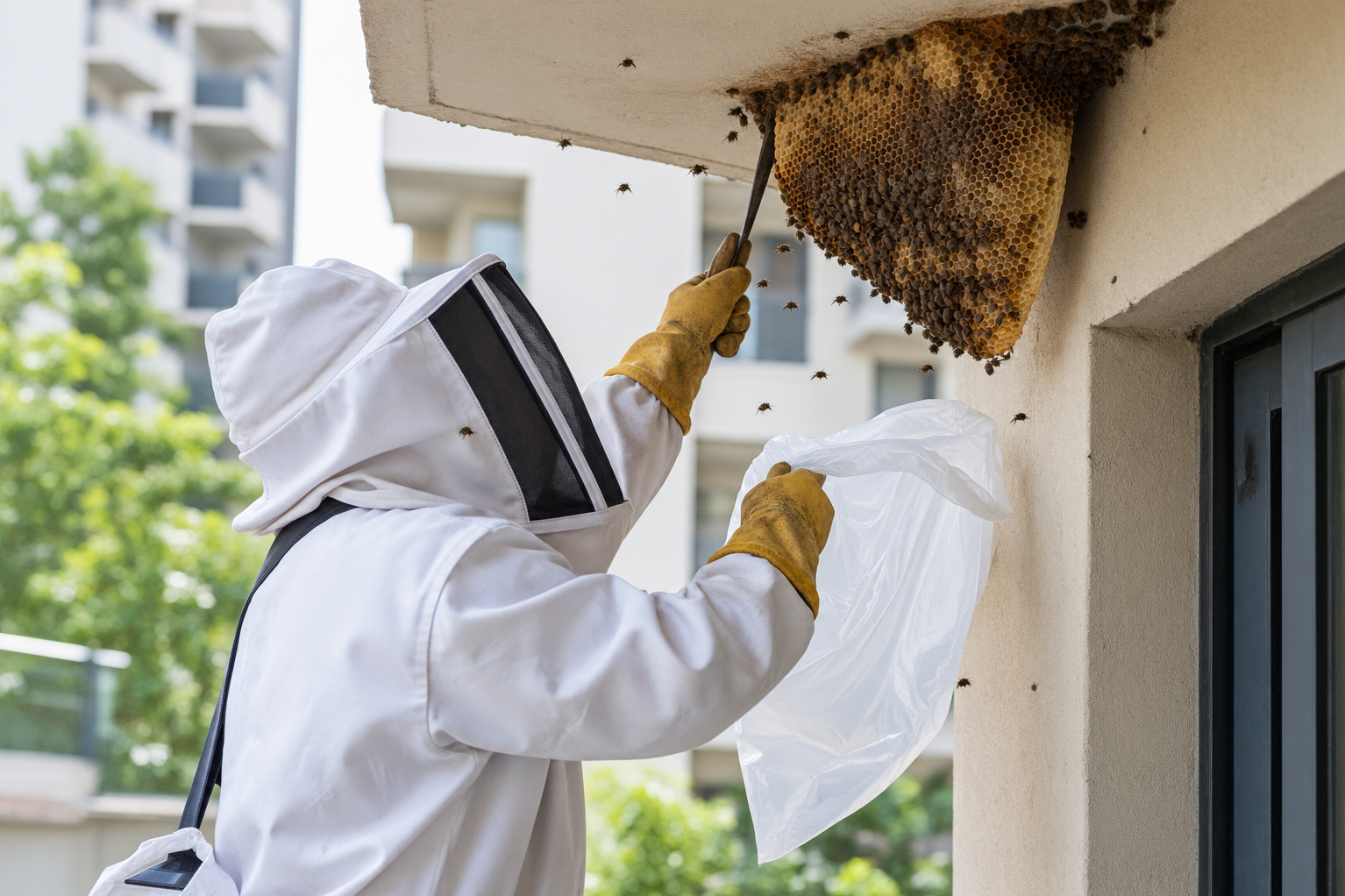
A honeycomb attached to a building may appear straightforward to remove, particularly when it is visible from a balcony or terrace. The situation becomes very different once an active colony is disturbed.
Understanding why professional honeycomb removal is recommended can help property owners avoid risky DIY attempts and evaluate when specialist assistance is appropriate.
For homes, residential societies, offices, and commercial properties around Patlipada, Thane, Maharashtra, the urgency of the situation depends heavily on where the colony is located and how frequently people use the surrounding area.
Active Colonies Can React to Disturbance
Hitting a honeycomb, attempting to cut it down, spraying an unsuitable product, or approaching it repeatedly can provoke defensive behaviour.
This becomes especially concerning when the colony is near:
- Building entrances
- Balconies
- Windows
- Children's areas
- Parking spaces
- Stairways
- Commercial entrances
- Frequently used terraces
Restricting access to the immediate area is safer than attempting improvised removal.
Height Creates Another Layer of Risk
Many honeycombs are located on building exteriors, trees, roof structures, ledges, or other elevated surfaces.
Even apart from bee activity, attempting removal from a ladder or unstable position can be hazardous.
Accessibility should therefore form part of the professional assessment.
Concealed Colonies Need Different Handling
Visible hanging honeycombs are not the only possibility. Bees may establish colonies in cavities, roof spaces, exterior gaps, or other sheltered areas.
Blocking an active entrance without understanding what is behind it may cause insects to search for another exit.
Professional assessment is particularly important when bees appear to be travelling repeatedly into a structural opening.
What to Ask Before Arranging a Service
Property owners should explain the location, approximate accessibility, surrounding activity, and whether bees appear to be entering a cavity.
Useful questions include:
- How should the area be prepared?
- Should residents stay away during the work?
- Can the location be accessed safely?
- What happens to remaining comb material?
- When can the area be used normally?
- What preventive maintenance may be needed afterward?
Clear instructions are especially important for residential societies and commercial properties where several people may use the affected area.
Provider Readiness Matters
Doctors Pest Control Service handles pest-management requirements in Patlipada and other areas of Thane. Before honeycomb work begins, the provider should understand the site's access conditions and the proximity of people to the colony.
Residents should avoid selecting a removal approach based purely on how quickly someone promises to knock the comb down.
After the Immediate Problem Is Resolved
Once the area is confirmed safe and inactive, inspect suitable structural gaps and sheltered locations. Maintenance can reduce opportunities for future nesting, although no building modification can guarantee that bees will never return.
Professional honeycomb removal is recommended primarily because disturbance, difficult access, and concealed colonies can make DIY removal unpredictable. Keeping people away, obtaining an appropriate assessment, and following safe site instructions is a more responsible response than attempting to remove an active colony without suitable experience.