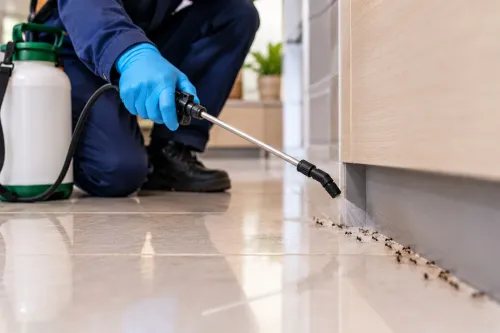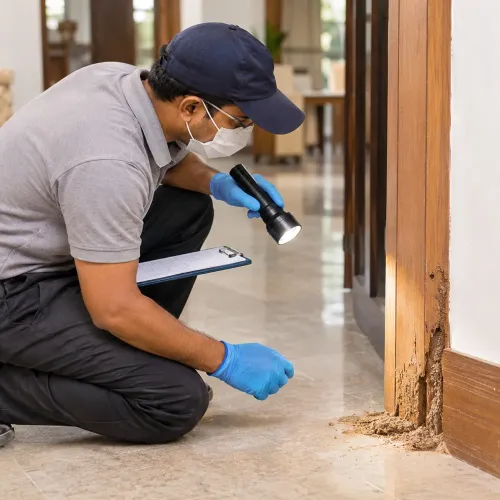
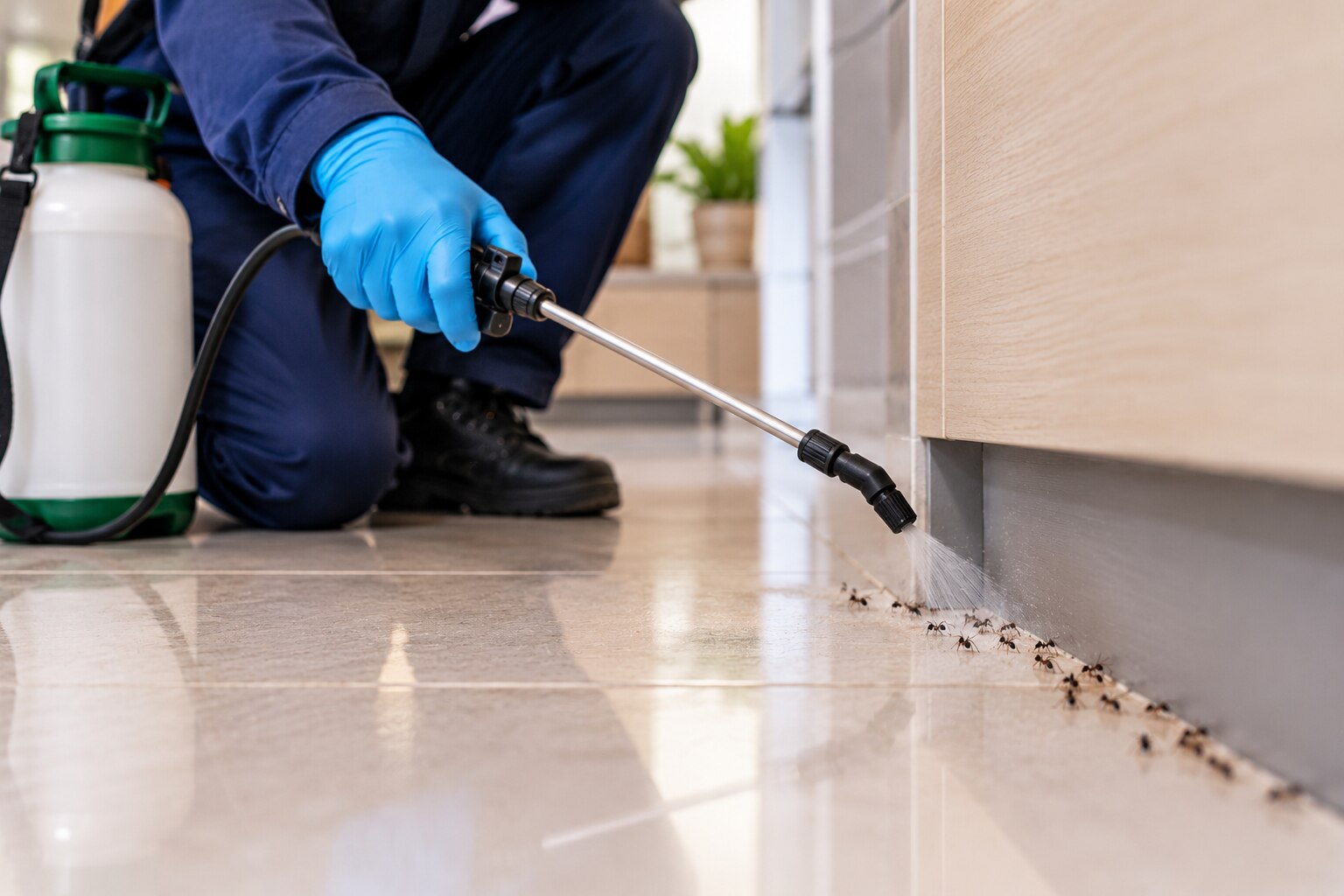
A visible mud tube or hollow-sounding frame is only evidence at the surface; the active route may run through foundation soil, a slab edge, a service penetration or a concealed wall void. By the end, you will know what a professional should inspect, how treatment is matched to termite type and construction, and which follow-up records protect the structure rather than merely treating the visible symptom.
Key takeaways
- Confirm active termites, species and entry route before treatment.
- Match treatment to subterranean or drywood termite behaviour.
- Install soil, slab and timber barriers at the correct stage.
- Schedule follow-up inspections after colony control to catch renewed activity.
What a Professional Inspection Must Find Before Treatment
A professional termite inspection must establish whether active termites are present, what type they are, and how they reached the building before anyone chooses a treatment. A surface spray can miss a colony beneath a slab, inside a wall cavity or in foundation soil.
1. Inspect the structure systematically. Check skirting, door and window frames, built-in cupboards, floor-wall junctions, roof timbers, crawl spaces, plumbing penetrations and concealed voids. Probe exposed wood for hollow sections, blistered finishes and weakened fibres.
2. Confirm activity instead of treating every mark as proof. Live workers or soldiers, freshly repaired mud tubes and moist, pale galleries indicate active termites. Brittle, empty mud tubes and discarded wings show past activity, but do not prove that the colony remains inside.
3. Separate termite evidence from other damage. A musty smell, soft timber and moisture damage can result from leaking plumbing or poor ventilation rather than termites. Inspect the source of dampness and look for soil contact, blocked drainage and earth-filled cavities.
4. Trace the entry route. Follow mud tubes from damaged wood towards garden soil, cracks at slab or wall junctions, damp utility shafts, terrace or balcony drains and plumbing openings. Note areas that cannot be opened or viewed, because concealed voids may require targeted investigation before treatment.
The report should identify the suspected termite type, active locations, moisture sources, damaged timbers, entry points and inaccessible areas. That evidence determines whether the building needs soil protection, timber treatment, wall-void work or further opening-up before treatment begins.
How Termite Type and Entry Route Change the Treatment
The entry route determines the protection your wooden structure needs. Subterranean termites usually start in soil and travel through cracks, service penetrations, slab edges or other soil-to-structure contact; drywood termites live inside the timber they infest and do not need ground access.
Match the protection to the termite type and route:
- Subterranean termites: require a continuous treated zone in the soil or foundation area, with special attention to plumbing conduits, expansion joints, slab edges and foundation cracks. Leave one gap untreated and termites can bypass the barrier. Wall cavities may also need treatment when mud tubes or activity show that termites have moved upward.
- Drywood termites: require treatment that reaches the infested wood, such as carefully targeted injection, an approved timber treatment or, for an enclosed structure, professional fumigation where legally available and appropriate. Fumigation can remove termites throughout a sealed building, but it does not create a lasting soil barrier.
- Accessible, unfinished timber: can receive a borate treatment, but borates are not a substitute for soil treatment when subterranean termites enter from the ground. Repeated wetting, paint, varnish or other finishes reduce performance.
Ask the technician to identify the species, locate live activity and map concealed routes before accepting a pesticide recommendation. Surface spraying alone can leave a colony below a slab or inside wall cavities untouched. Fumigation also requires removal of people, pets and plants, followed by clearance before re-entry.
How Pre-Construction and Post-Construction Barriers Are Installed
Before concrete hides the ground, a pre-construction termite treatment builds the most complete barrier. The aim is an unbroken treated zone between surrounding soil and wooden elements; an untreated gap beside a pipe can defeat an otherwise sound installation.
- Treat the compacted soil treatment below slab before the floor is poured, following the product label’s dilution and application rate.
- Apply termiticide beside foundation trenches and at the external soil-to-wall edge before backfilling.
- Treat service penetrations where plumbing or electrical conduits pass through the slab or foundation.
- Seal and treat wall-floor junctions, construction joints and slab edges that could provide a hidden route.
A post-construction termite treatment rebuilds accessible sections of this zone without removing the whole floor. Technicians may trench beside the foundation, drill measured holes through slabs or masonry, and carry out foundation injection drilling to place termiticide into soil or concealed voids. They then plug the holes with matching mortar or another specified sealant.
The drilling pattern, injection volume and spacing must follow the product label and the building’s construction.
The work is not a room spray aimed at visible timber. Inspectors must connect each drilled, trenched or injected section so termites cannot bypass the barrier through an unsealed penetration or slab crack.
Bait stations offer a different strategy: they reduce broad soil treatment but rely on correct placement, inspections and repeated servicing rather than creating a continuous treated zone.
How to Compare Liquid Treatments, Baits and Timber Applications
Do not approve a termite treatment from its brand name alone. Read the label for the active ingredient, formulation, permitted application site, dilution or dose, equipment, protective clothing, re-entry period and restrictions around wells, drains, food areas, children and pets.
| Option | What to compare on the label | What failure looks like |
|---|---|---|
| Liquid soil termiticides | Active ingredient, concentration, soil application rate, foundation and slab directions | An untreated gap lets subterranean termites bypass the treated zone |
| Non-repellent barriers | Whether the product is labelled for continuous soil treatment and the required trenching, drilling or injection pattern | Termites cross the zone, but poor installation still leaves an entry route |
| Repellent barriers | Where the repellent product may be applied and how joints, cracks and utility penetrations must be connected | Termites avoid treated soil and enter through an untreated edge |
| Termite bait systems | Toxicant, station placement, inspection interval, replenishment instructions and activity expectations | Workers remain visible while monitoring is skipped or bait runs out |
| Timber applications | Wood species or surface limits, injection or surface directions, dose, drying and re-entry requirements | A surface spray misses timber concealed inside walls or floor voids |
Ask to see the product label and the written treatment plan together. The plan should identify every treated location, inaccessible area and sealing or drilling work; “spray the wood” is not a method.
Treat baiting as a monitored programme, not an instant barrier. Ask how often stations will be inspected and what happens if termites continue feeding. Ask for the product name, formulation, batch number and application record before work begins.
How Follow-Up Protects the Timber After the Colony Is Controlled
Chemical control does not restore load-bearing timber. A termite treatment follow-up must check for fresh mud tubes, live insects, new frass or discarded wings, then confirm that entry routes and moisture sources have been corrected.
If activity remains, the technician must trace the colony trail and extend or change the treatment rather than simply respray visible wood.
Ask for a service record that identifies:
- Areas inspected, including roof timbers, floor-wall junctions, cupboards, frames, plumbing penetrations and concealed voids
- Evidence found and areas that could not be accessed
- Product formulation, application locations and date
- Moisture management work, such as repairing leaks, clearing drains, improving crawl-space ventilation or removing soil from wall cavities
- Recommended timber repair and the follow-up inspection date
- Treatment warranty terms and exclusions
A treatment warranty is not proof that the colony has been eliminated. It is useful only when the record defines what is covered, how quickly you must report renewed evidence and whether untreated extensions, inaccessible voids or unrepaired leaks are excluded.
Doctors Pest Control Service 9820089331 can be judged by whether its paperwork records these decisions instead of offering only a completion claim.
Timber repair comes after the infestation is controlled and the damage is assessed. Replace unsound joists, rafters or door frames; sister members that retain adequate strength; and obtain a structural contractor’s assessment where load-bearing capacity is uncertain. Painting or filling termite galleries hides damage without making the wood safe.
Related products
TERMITE CONTROL TREATMENT ₹10000 White ants or termites are one of the most dangerous wood destroying organisms. Termites are social insects. View product → |
 | Termite Control Service Protect your assets from expensive damage by termites with our professional Termite Control Service in Thane. View product → |
Frequently asked questions
What must a professional termite inspection find before treatment?
It must identify active termites, the termite type, damaged timber, hidden colony locations and the route termites use to reach the building.
Why does the termite type change the treatment plan?
Subterranean termites require attention to soil, foundations and slab entry routes, while drywood termites can live inside timber and need targeted wood treatment or removal.
How are pre-construction and post-construction termite barriers different?
Pre-construction barriers are installed beneath slabs and around foundations before the building is completed. Post-construction work treats accessible soil, masonry, cracks, service penetrations and other entry points around an existing structure.
How do liquid treatments, bait systems and timber applications compare?
Liquid treatments create treated zones at soil or structural entry points, bait systems target termite colonies through workers, and timber applications address infestation inside accessible wood. The inspection determines which method fits the site.
Why are follow-up inspections needed after termite treatment?
Follow-up checks confirm that termite activity has stopped, find missed or newly active areas and identify moisture or timber conditions that could support reinfestation.