Cockroach control often fails because food, moisture, hiding places and repellent residues remain available after treatment begins. You will learn how to prepare the space, protect bait placements, identify the source and decide when follow-up or coordinated treatment is necessary.
Key takeaways
- Clean food, grease and standing water before placing cockroach bait.
- Keep sprays away from gel bait so cockroaches are not repelled.
- Treat cracks, cabinets and appliance voids instead of only open floors.
- Keep bait in place long enough to reach hidden cockroach harbourages.
Leaving food, water and clutter available overnight
Poor cleaning and moisture control make treatment fail by giving cockroaches food and water after bait is placed, so they have less reason to feed on it. Dirty dishes, food crumbs and grease left overnight compete with bait; a cockroach can eat residue beneath a refrigerator or cooking unit and ignore a nearby bait placement.
Treat hidden contamination as part of the treatment, not as cosmetic housekeeping. Clean beneath and behind refrigerators, ovens, shelving and storage racks, and remove cardboard and clutter that provide harbourage. Do not put bait on wet, dusty, greasy or recently cleaned surfaces: residue can contaminate it, while moisture can change the gel’s texture.
Water alone can sustain an infestation after food is removed. Before treatment, inspect and correct:
- Leaking sink traps, supply pipes and refrigerator lines
- Condensation beneath refrigerators or air-conditioners
- Wet mop areas, floor drains and damp wall voids
- Pooled water around sinks or equipment
Dry sinks and mop areas before closing, empty dish racks, and remove standing water overnight. Keep bait away from strong cleaners and insecticide sprays; repellent residue can drive cockroaches away from it. If moisture returns by morning, find the leak or condensation source instead of repeatedly adding insecticide.
Sanitation does not replace targeted treatment, but without it, bait competes with a free meal and reliable water supply.
Using sprays or too much gel around the bait
A spray that reaches cockroach gel bait can turn a useful placement into a warning sign. Household aerosol sprays, insecticide chalk, insecticide powders and strong cleaners leave repellent residues that drive cockroaches away, contaminate the bait or scatter them into wall voids and neighbouring rooms.
| Mistake | Why bait control suffers | Better choice |
|---|---|---|
| Household aerosol sprays near bait | Repellent residues make the bait less attractive and can scatter cockroaches | Use targeted crack-and-crevice treatment away from bait, following the label |
| Insecticide chalk or insecticide powders around bait | Dust contaminates the gel and creates a treated zone the insects avoid | Keep bait placements clean and use powders only where the label permits |
| One large gel blob or exposed line | It dries, collects dust and is easily removed during cleaning | Place many small dots in cracks, corners and other travel routes |
| Bait on wet, greasy, dusty or recently cleaned surfaces | The gel loses contact with the surface or its odour becomes less attractive | Apply it to dry, clean areas that remain undisturbed |
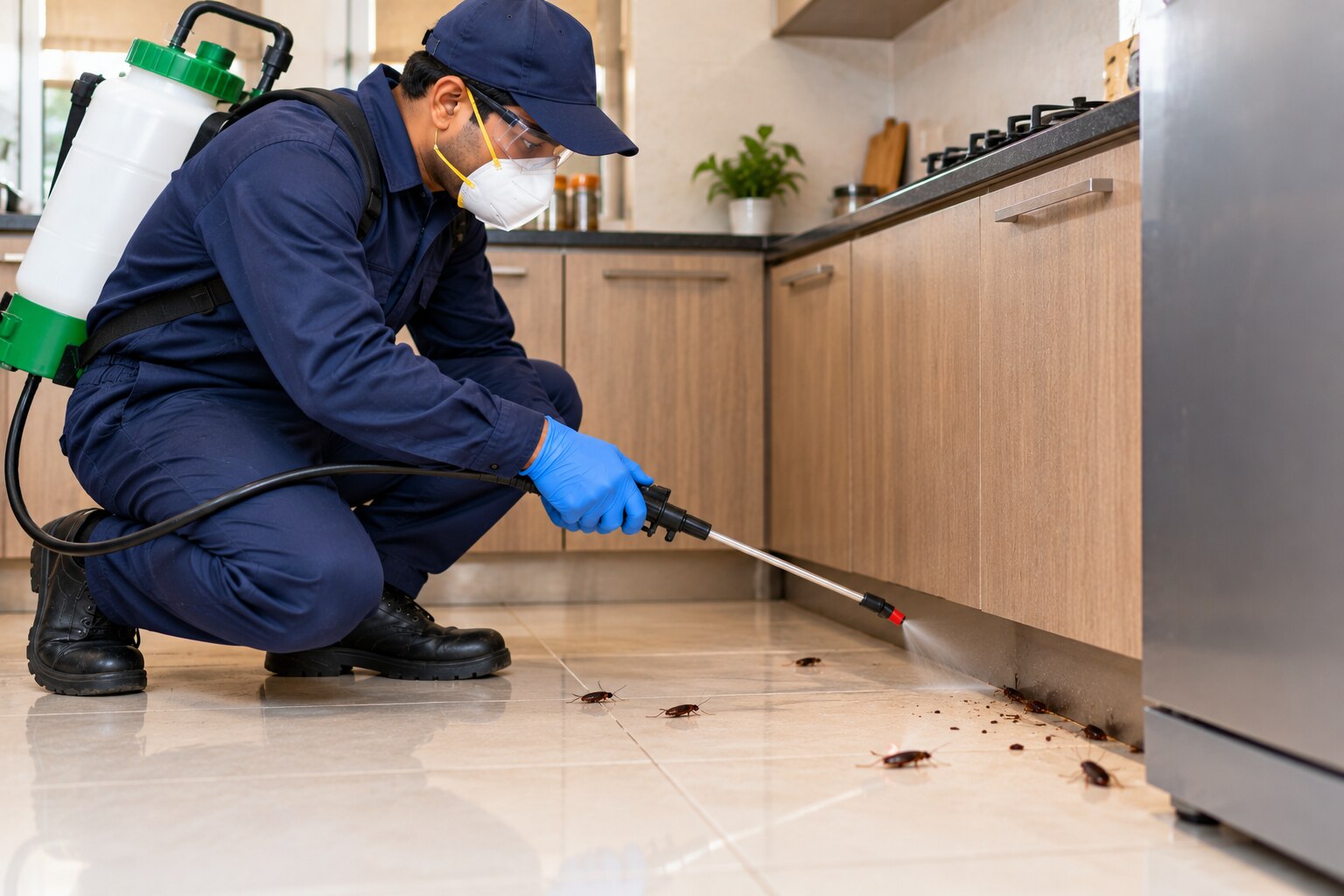
Place small amounts inside cabinet hinges, drawer tracks, sink voids, plumbing penetrations, refrigerator compressor spaces and wall cracks. Open floor placements miss the harbourages where German cockroaches spend most of their time.
Do not use a total-release fogger or an agricultural, outdoor or unlabelled insecticide indoors. Foggers can leave residues on food-contact surfaces and fail to reach protected voids; use every pesticide only at the sites, rates and methods printed on its Indian product label.
Treating open floors while missing the real harbourages
An open floor is usually a travel route, not the cockroach harbourage. Inspect dark, tight spaces near food, water, warmth and building services, then place treatment where cockroaches emerge and move.
- Cabinet hinges, drawer tracks and the gaps behind cabinet backs, where nymphs can remain undisturbed.
- Plumbing penetrations around supply pipes, waste pipes and wall entries, especially where dampness or grease has collected.
- Sink voids beneath basins and inside the cabinet below them; leaking traps and wet pipework keep these spaces attractive.
- Refrigerator compressor spaces, drip trays and the gap beneath the appliance, where heat, crumbs and condensation combine.
- Cracks along skirting, wall joints, door frames and the backs of shelving, rather than only the open floor in front of them.
- Gaps behind cooking equipment, storage racks and other fixed appliances that are rarely moved during routine cleaning.
In an apartment block or row of adjoining shops, inspect the wall, ceiling and service voids connecting the affected premises. Check shared plumbing areas, meter cupboards and nearby units when activity continues after one room is treated. Cockroaches can cross these routes without appearing in the open.
Treating only the floor can leave the breeding population untouched. Targeted small placements or other control measures belong in cracks and equipment voids, not as a broad coating across walkways where cleaning removes them and people disturb them. Locate the harbourage before sealing gaps; closing one opening can redirect cockroaches into another accessible void.
Removing bait too soon and treating only visible adults
Do not remove cockroach bait after a few quiet days. Leave it in place for the product’s stated service interval and replace it when it is consumed, contaminated or no longer fresh.
German cockroach egg cases can remain protected from surface insecticides, and nymphs may hatch after the first treatment, so adult sightings are a poor stopping signal.
Use glue traps to measure activity between treatments, not as the treatment itself:
- Mark each trap’s location and date, then record the number and life stages caught.
- Place traps under sinks, behind refrigerators, near drains and along wall edges.
- Compare catches after several days and again after treatment; declining numbers matter more than one empty trap.
- Replace traps only after recording the result, or you lose evidence of where hidden activity remains.
A follow-up inspection checks bait condition, trap catches, fresh droppings and newly active harbourages. Ask Doctors Pest Control Service 9820089331 to use those findings to adjust treatment rather than simply spraying the adults you happened to see.
Continue monitoring after the first visit, especially in kitchens and food-service areas, because hidden nymphs can mature and restart the infestation. A later reduction in visible adults does not prove that egg cases, nymphs or wall-void populations are gone.
Related products
GENERAL TREATMENT Gel or cockroach bait will be applied in sensitive areas such as electrical control boxes, kitchen appliances, trolleys, pantry, in inches of... View product → |
COCKROACH, ANT AND SPIDER TREATMENT COCKROACH, ANT AND SPIDER TREATMENT Ants and cockroaches pose a major threat to most households as they can contaminate the food. View product → |
Sealing entry routes without finding the source
Seal gaps after you locate and remove the active population, not before. Closing one route while cockroaches remain inside can push them into wall voids, adjoining rooms or new openings, making the infestation harder to trace.
Inspect these routes and nearby harbourages before applying sealant:
- Pipe entries beneath sinks and behind toilets
- Electrical conduits, cable openings and service penetrations
- Gaps behind cabinets, skirting and wall-mounted fixtures
- Doors and windows, including damaged seals and threshold gaps
- Floor drains, drain covers and damp voids around plumbing
Check the other side of each wall, ceiling and service shaft. In an apartment, inspect adjacent flats, common utility areas and the corridor near shared pipes; cockroaches can travel through plumbing openings, ceilings and wall voids. Treating only the first kitchen or shop where you saw one often fails.
The source also changes the investigation. German cockroaches commonly breed indoors near warm, food-rich equipment, while American and smoky-brown cockroaches point more strongly toward drains, sewers, basements or damp outdoor harbourages. Repair leaking traps, pipes and condensation sources before sealing.
Involve a professional service when sightings continue after treatment, appear in multiple rooms or units, or come from inaccessible voids and floor drains. Ask for a source inspection, neighbouring-area assessment and a follow-up visit; egg cases can survive the first treatment, and newly hatched nymphs can reopen the problem after every gap is sealed.
Frequently asked questions
Why do food, water and clutter make cockroach control harder?
Dirty dishes, crumbs, grease, moisture and clutter provide alternative food, water and shelter after bait is placed. Clean surfaces, remove waste and dry wet areas overnight.
Why should you avoid spraying around cockroach gel bait?
Spray can repel cockroaches from the bait, while excessive gel creates competing placements that reduce feeding at the intended treatment points. Follow the product label and keep incompatible sprays away.
Where should cockroach treatment be placed instead of on open floors?
Focus on harbourages such as cracks, cabinet joints, plumbing gaps, appliance voids and spaces beneath refrigerators or cooking units. Open-floor treatment misses the sheltered areas where cockroaches hide.
Why should cockroach bait not be removed too soon?
Bait needs time to reach cockroaches hidden in harbourages, including nymphs and adults that are not visible during inspection. Remove it only according to the product label or treatment instructions.
Should you seal cockroach entry routes before finding the source?
Find the source first. Sealing one gap without locating the harbourage can trap the problem in another area or leave the main food, moisture or access route untreated.